Muneeb Qazi

InScribe AI

B2B SaaS GenAI platform with multi-stage AI pipelines and human-in-the-loop workflows.

Role & Responsibility

Senior AI UX Designer

Led end-to-end UX research, design, and usability testing.

July 2025 – Present

Overview

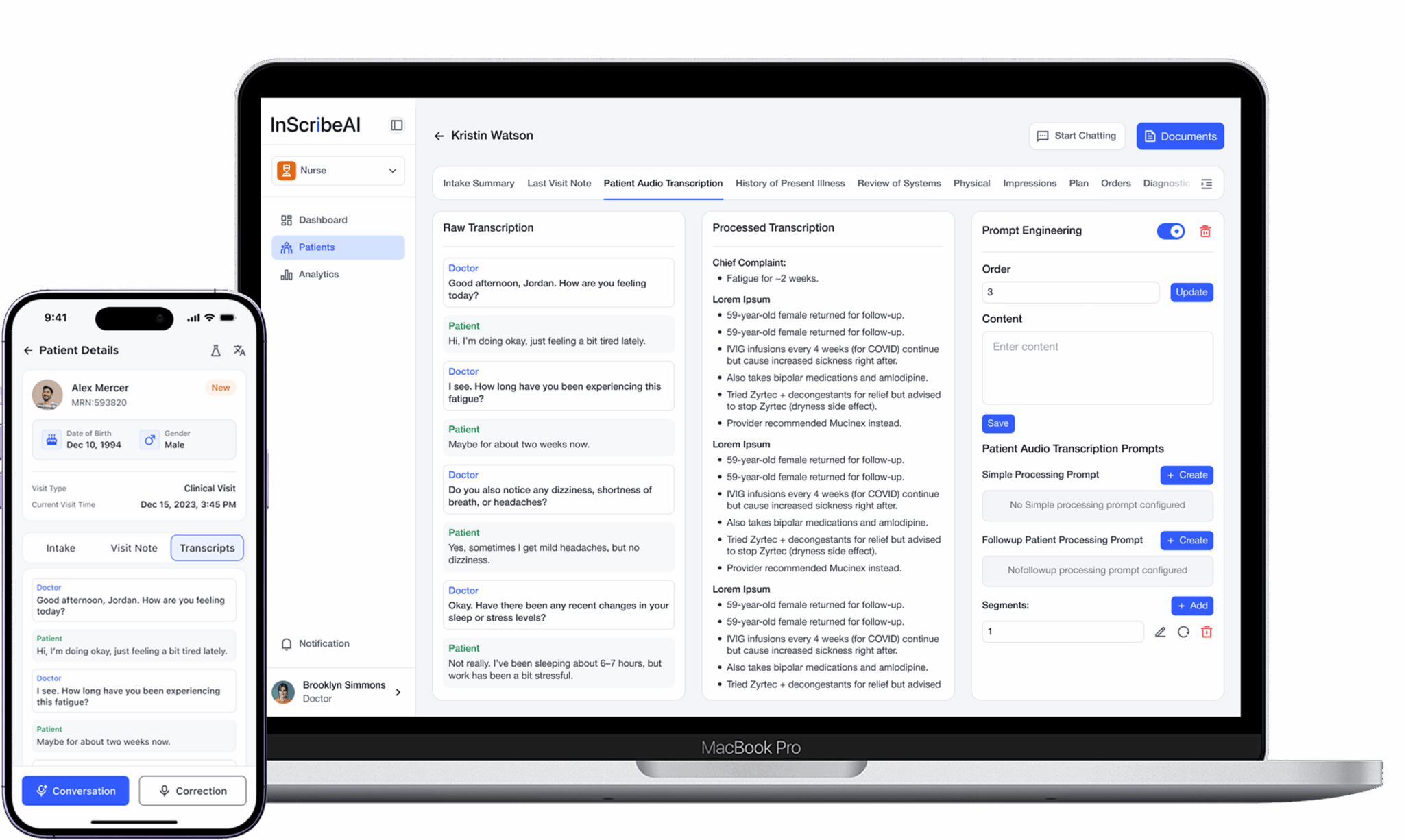
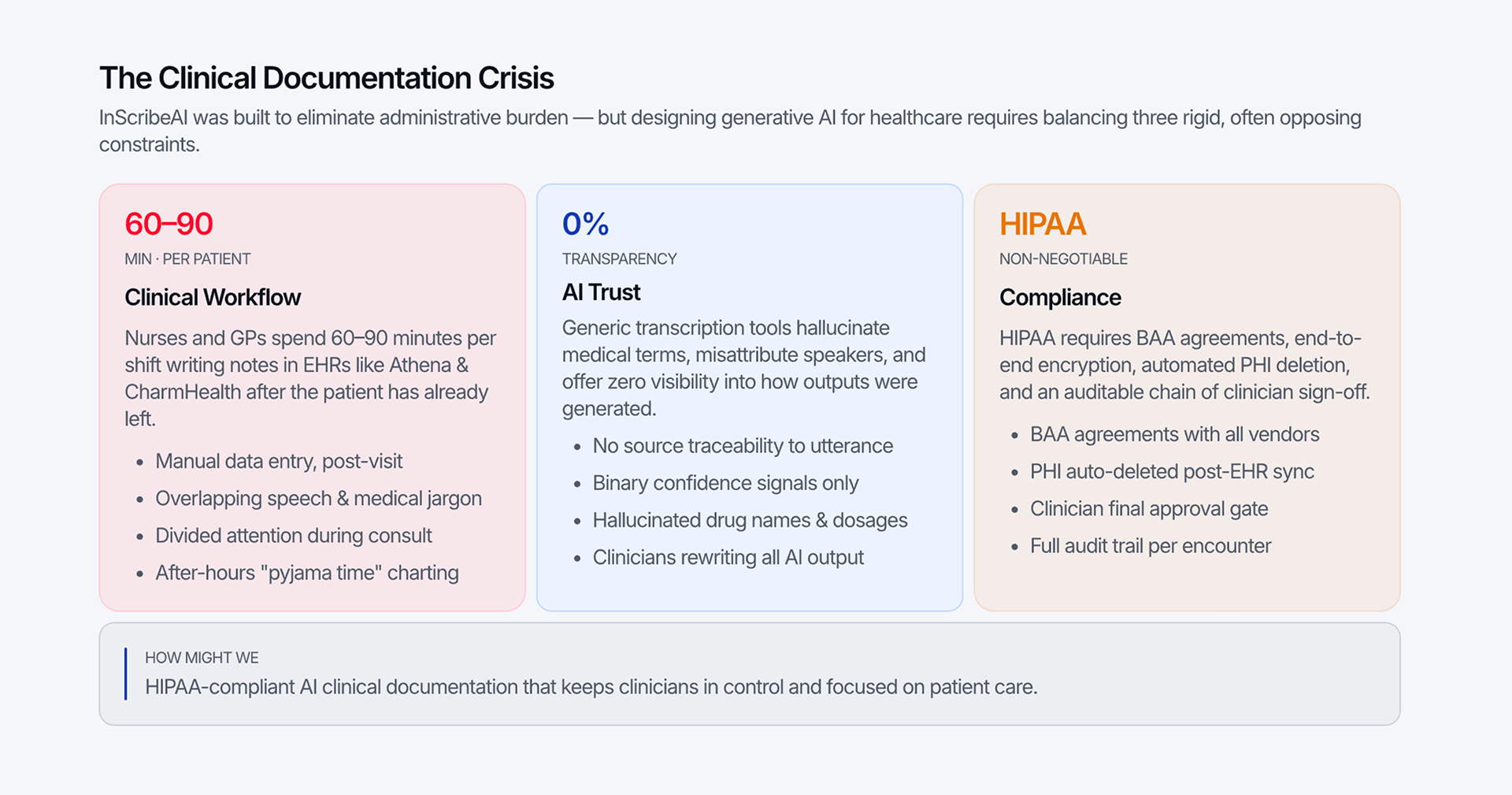
InScribeAI is a B2B GenAI SaaS platform that automates the manual clinical documentation workflow performed by nurses and general practitioners (GPs) in EHR systems such as Athena and CharmHealth.
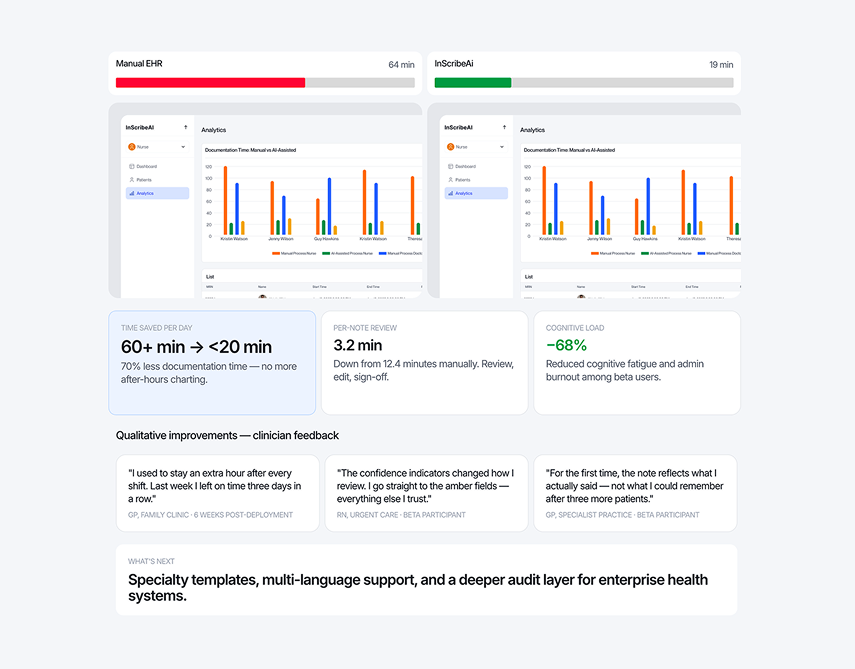
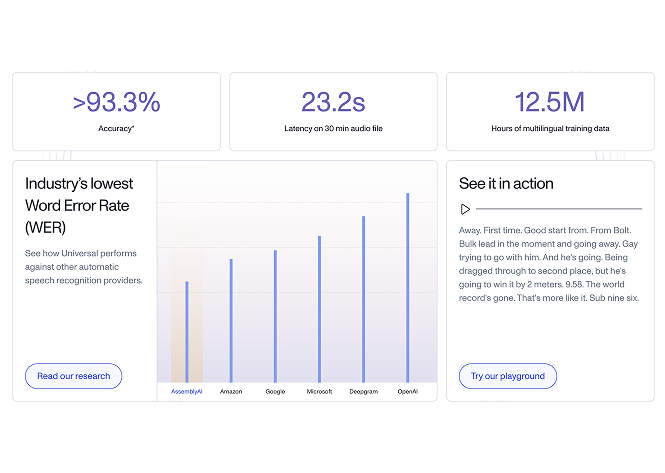
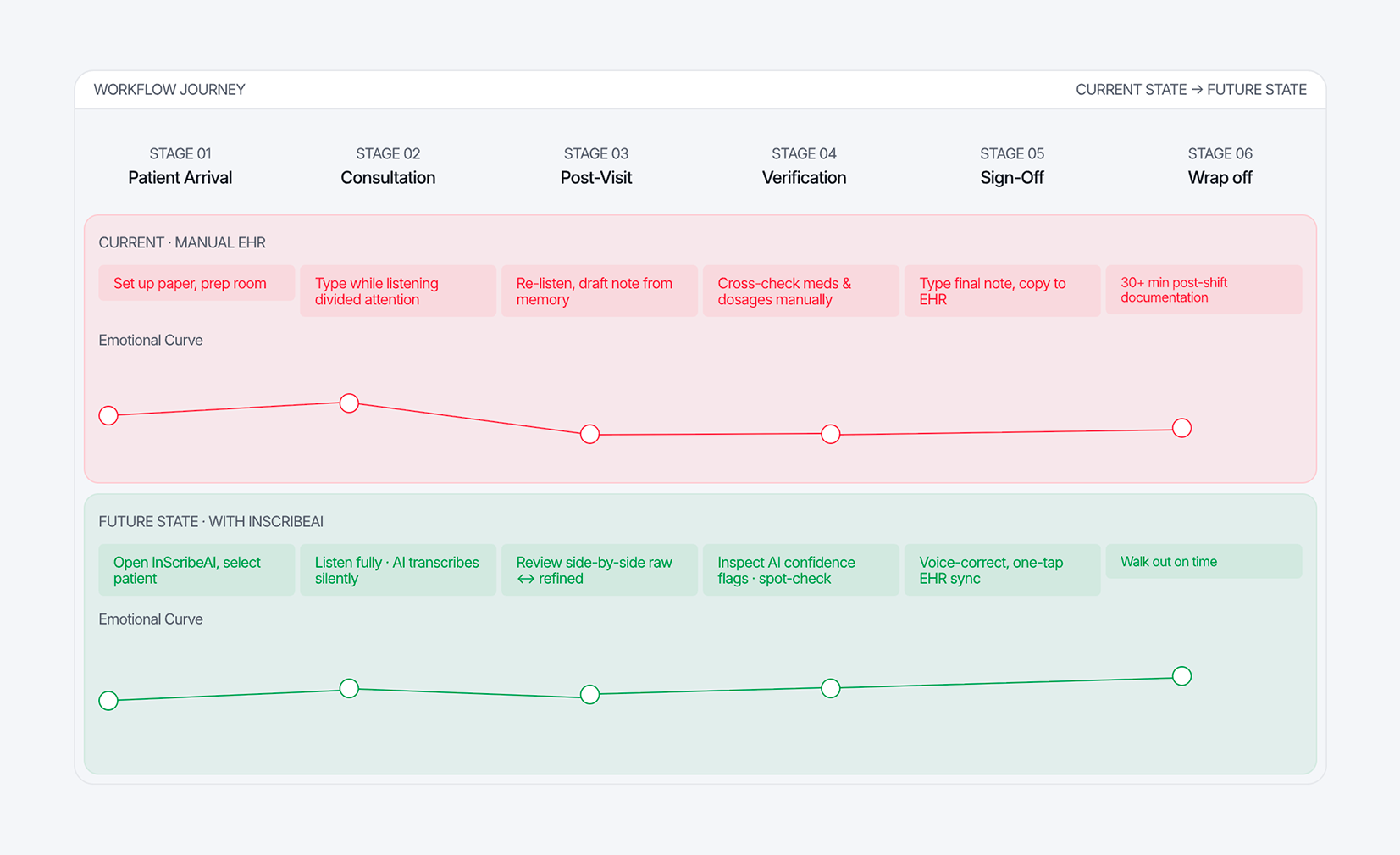
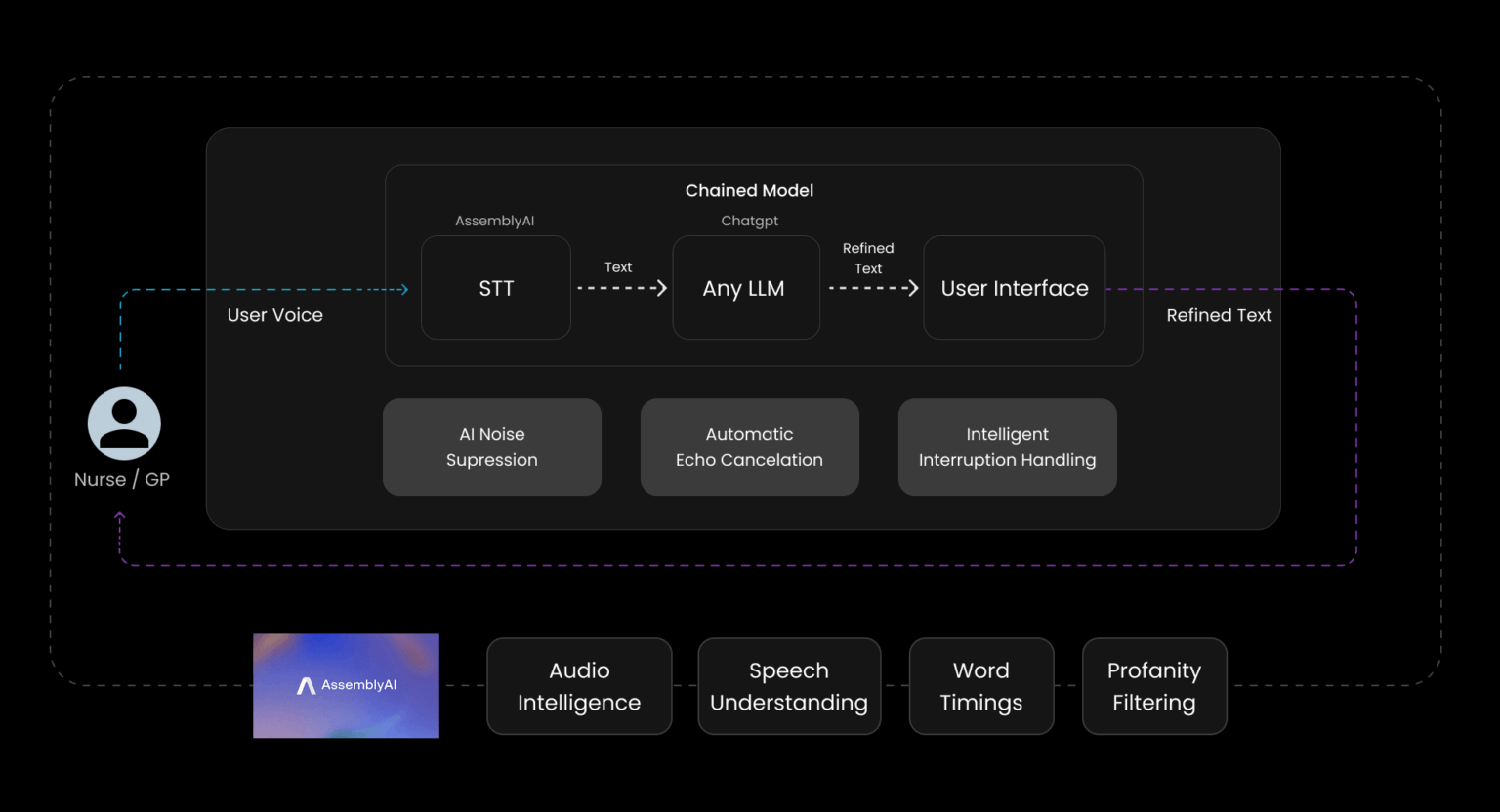
By combining AssemblyAI for speech-to-text, LangChain and ChatGPT for multi-stage prompt-engineered refinement, and a carefully designed human-in-the-loop UX, we reduced clinical documentation time from over an hour to under 20 minutes while maintaining HIPAA compliance and clinician control.

Key Challenges

• Conversational context: handling overlapping speech, medical jargon, and speaker differentiation.
• Multi-stage AI design: defining safe, accurate LLM prompt pipelines for clinical documentation.
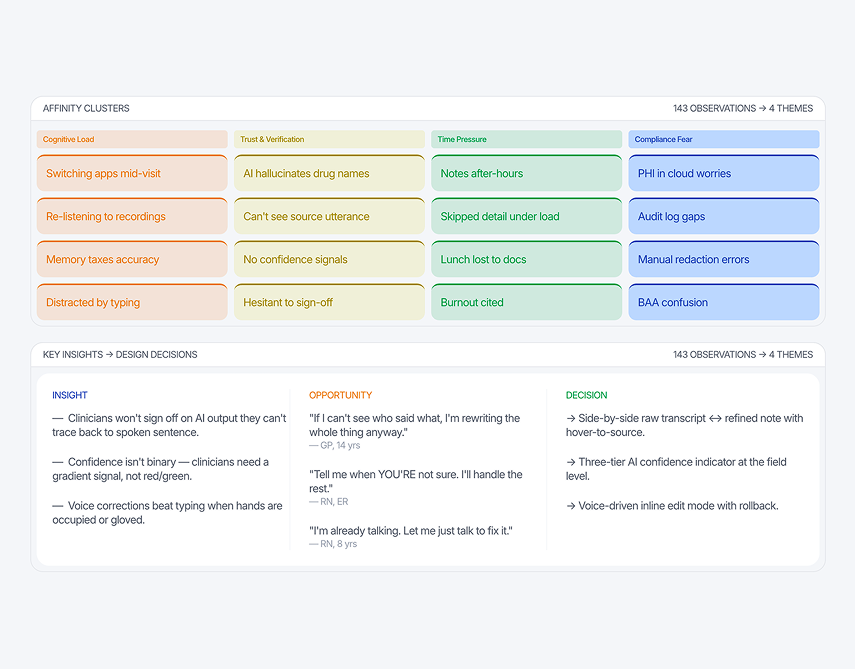
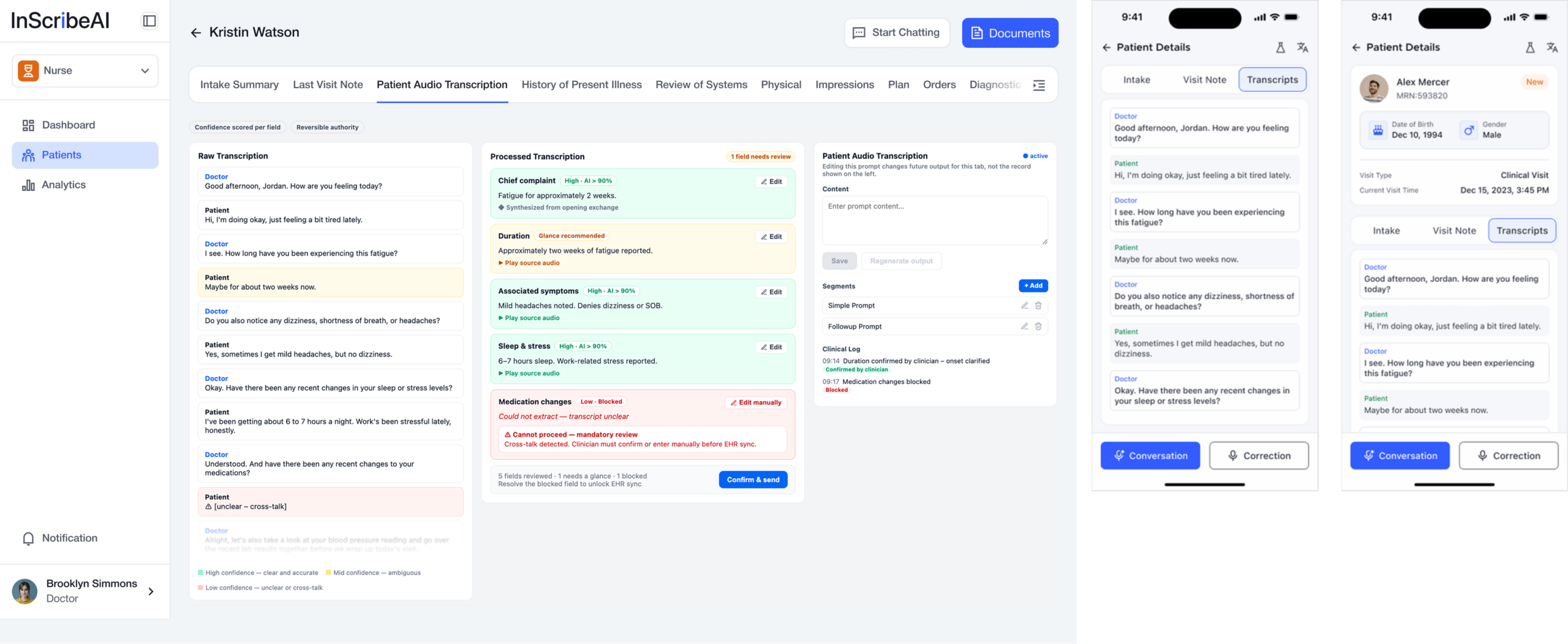
• Human oversight & trust: building side-by-side raw vs. refined views and voice-driven corrections.
• Token efficiency: reducing LLM token usage for both multi-stage note refinement and RAG queries.
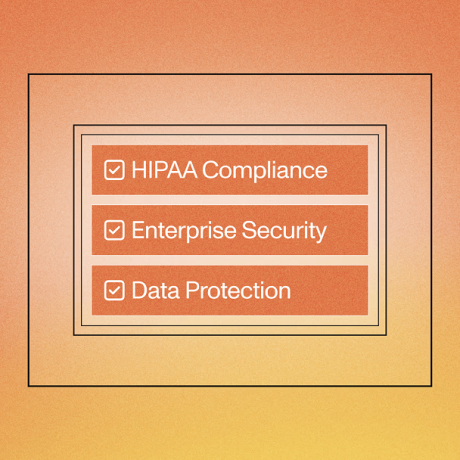
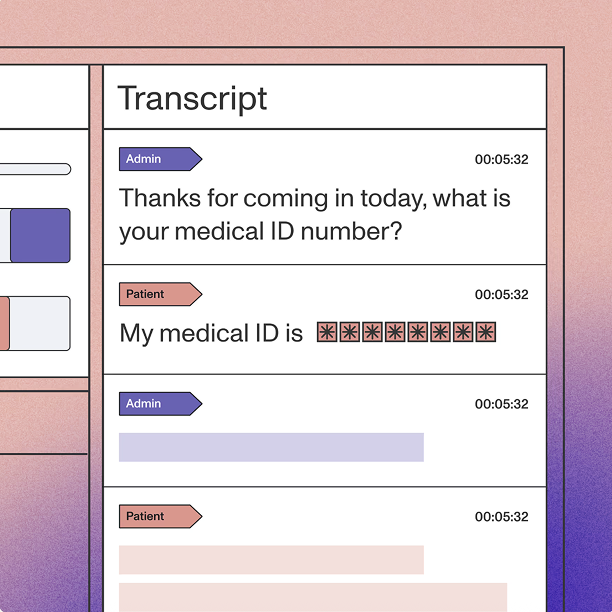
• HIPAA compliance: encryption, BAA agreements, and automated PHI deletion.

Main Objective

InScribeAI is a HIPAA-compliant conversational AI platform that automates end-to-end clinical documentation directly into EHRs like Athena and CharmHealth. It combines real-time speech-to-text, multi-stage prompt-engineered LLM pipelines, and human-in-the-loop controls to capture encounters, generate structured notes, and support voice corrections. A Retrieval-Augmented Generation (RAG) chat feature lets clinicians query patient records with minimal token usage, cutting documentation from hours to minutes while improving accuracy and freeing clinicians to focus on care.

Understanding The Market

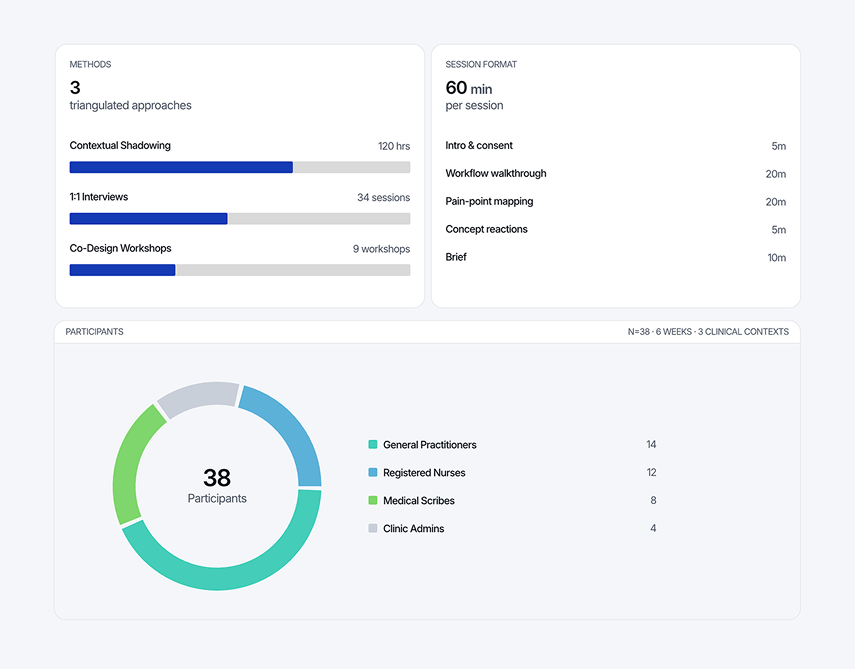
To shape InScribeAI, we analyzed the rapidly growing clinical documentation and conversational AI landscape. I conducted competitive research on EHR-integrated AI tools and interviewed clinicians, administrators, and IT stakeholders to uncover pain points—manual data entry, high costs, and trust in AI output. This research guided our hypotheses, validated user needs, and informed the product strategy for a HIPAA-compliant, real-time documentation platform.

User Persona

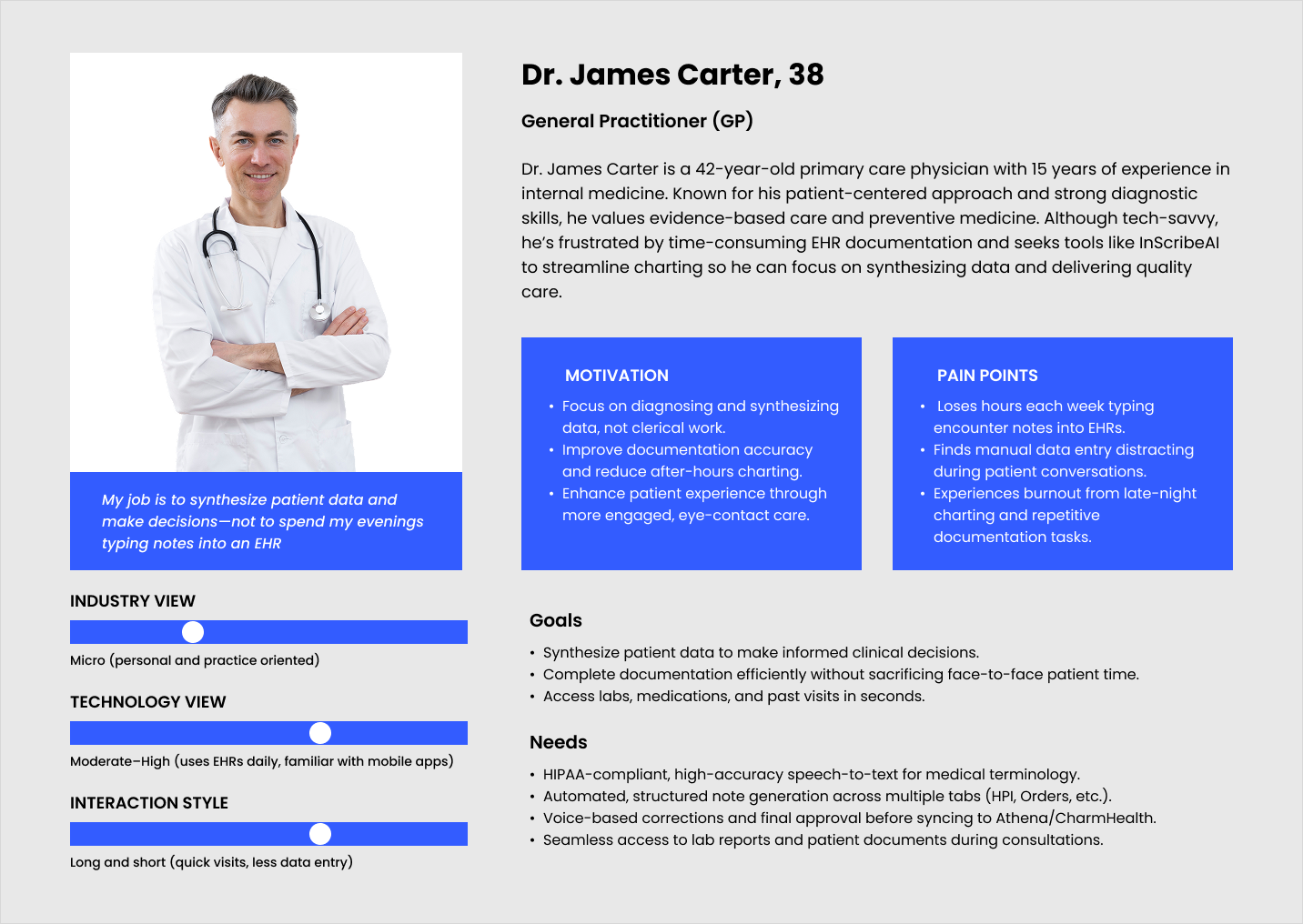
Based on interviews with clinicians and doctors, we developed a representative persona to guide design decisions and ensure the platform meets the needs of healthcare professionals who handle patient documentation daily.

AI Capabilities & Research

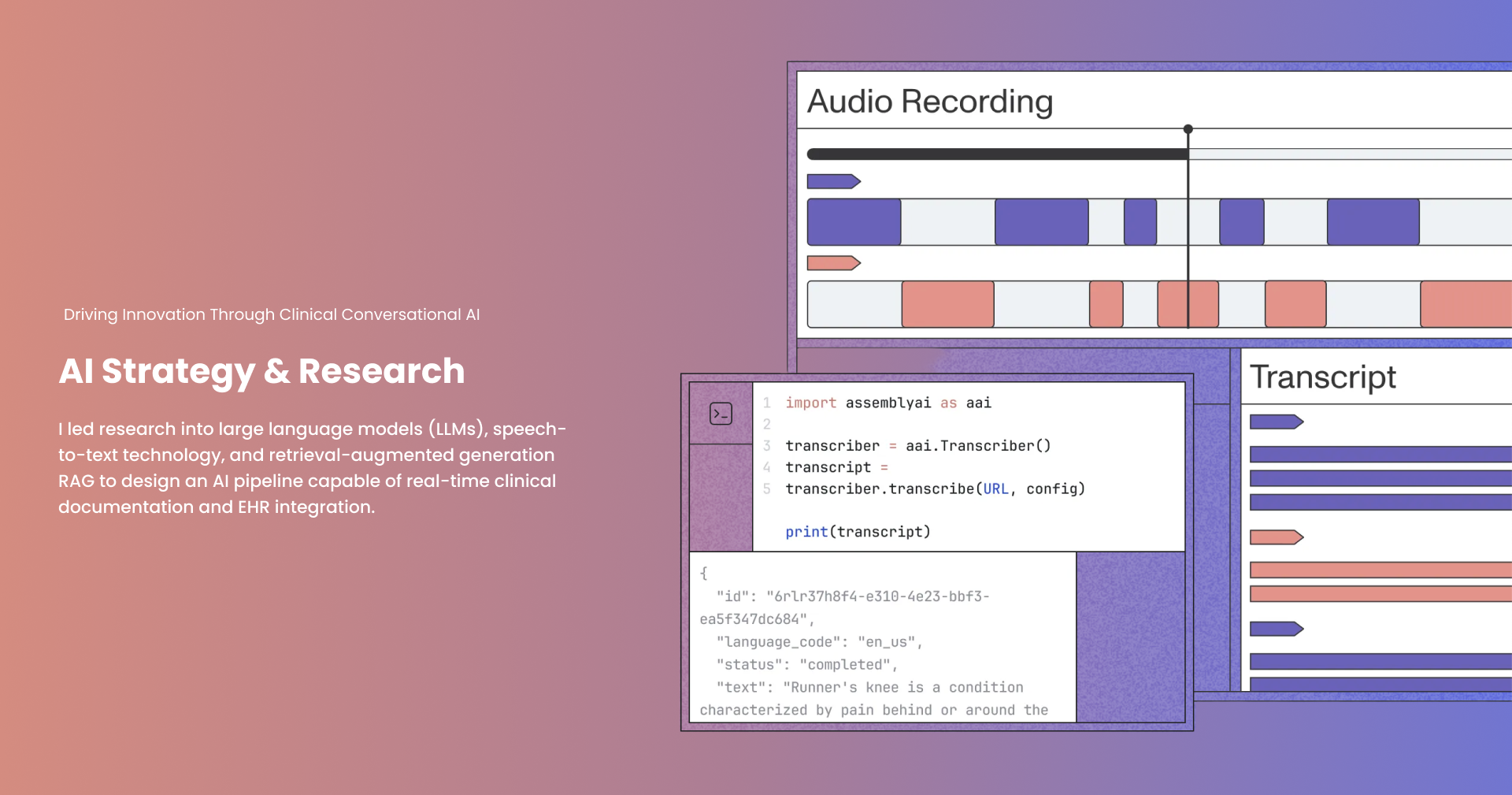
Research into machine learning, conversational AI, and multi-stage prompt engineering informed the development of AI-driven clinical documentation tools, enhancing the InScribeAI platform’s capabilities and seamless integration with EHR systems.

Research & Technical Exploration:

Evaluated STT engines and selected AssemblyAI for accurate medical transcription with speaker diarization, studied LLM capabilities (ChatGPT + LangChain) to design multi-stage prompt-engineering pipelines for clinical tabs while optimizing token usage, and implemented retrieval-augmented generation to enable fast, grounded Q&A on patient records within the SaaS portal.
Screenshot 2025-09-23 at 13.58.53 1

Conversational AI & Voice Interaction Design:

Designed speech-driven correction flows allowing nurses and doctors to edit transcripts and structured fields by voice while ensuring HIPAA compliance, and accounted for overlapping speech, medical jargon, and noisy clinical environments to preserve natural dialogue flow and minimize cognitive load.

Prompt Engineering & Token Optimization:

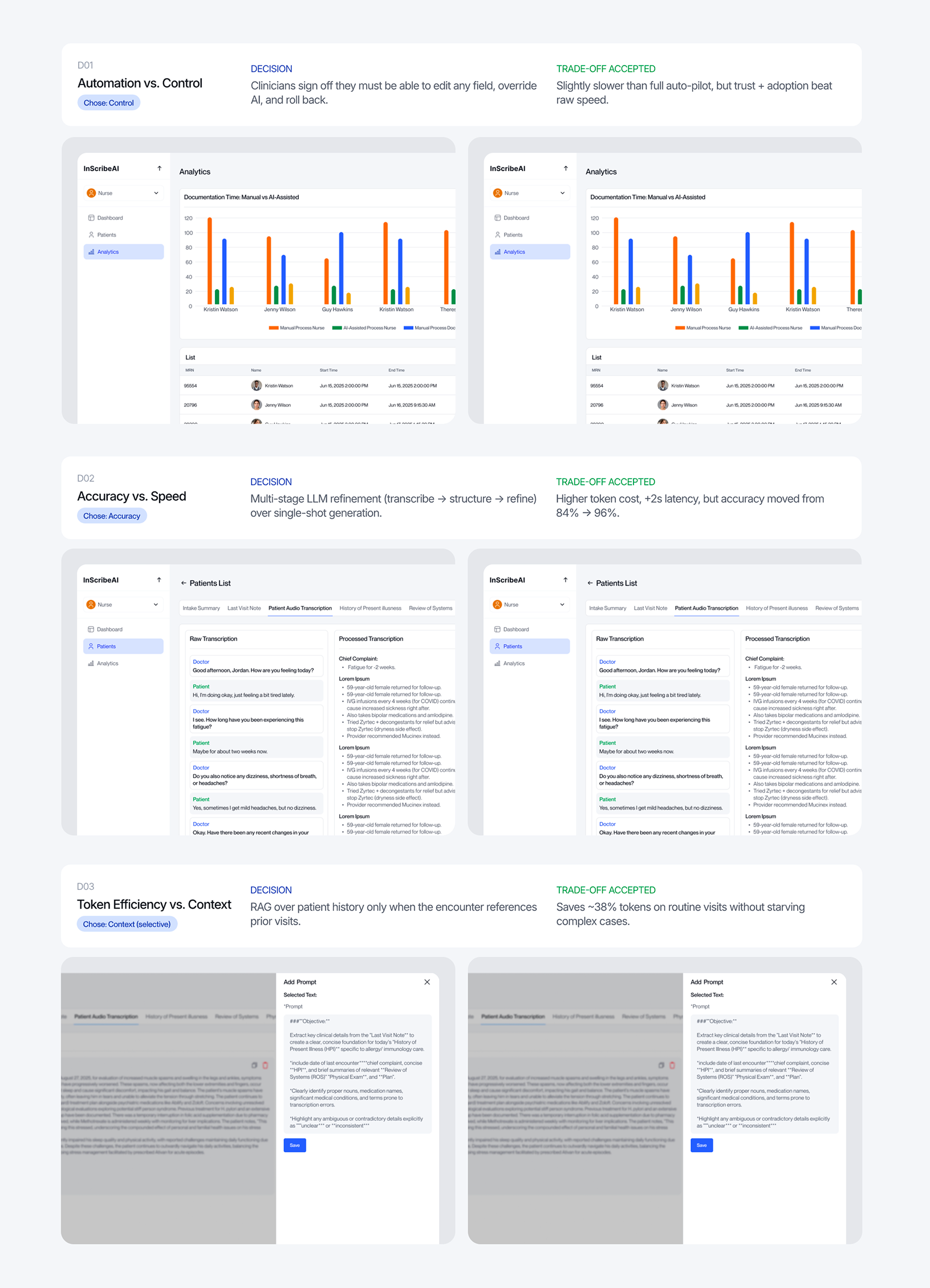
Built a multi-stage refinement architecture using concise prompts and selective context injection to minimize token usage while improving accuracy, and applied token-efficient retrieval for RAG queries, passing only relevant document chunks to ChatGPT to reduce costs during dashboard Q&A.

Human-Centered AI Principles:

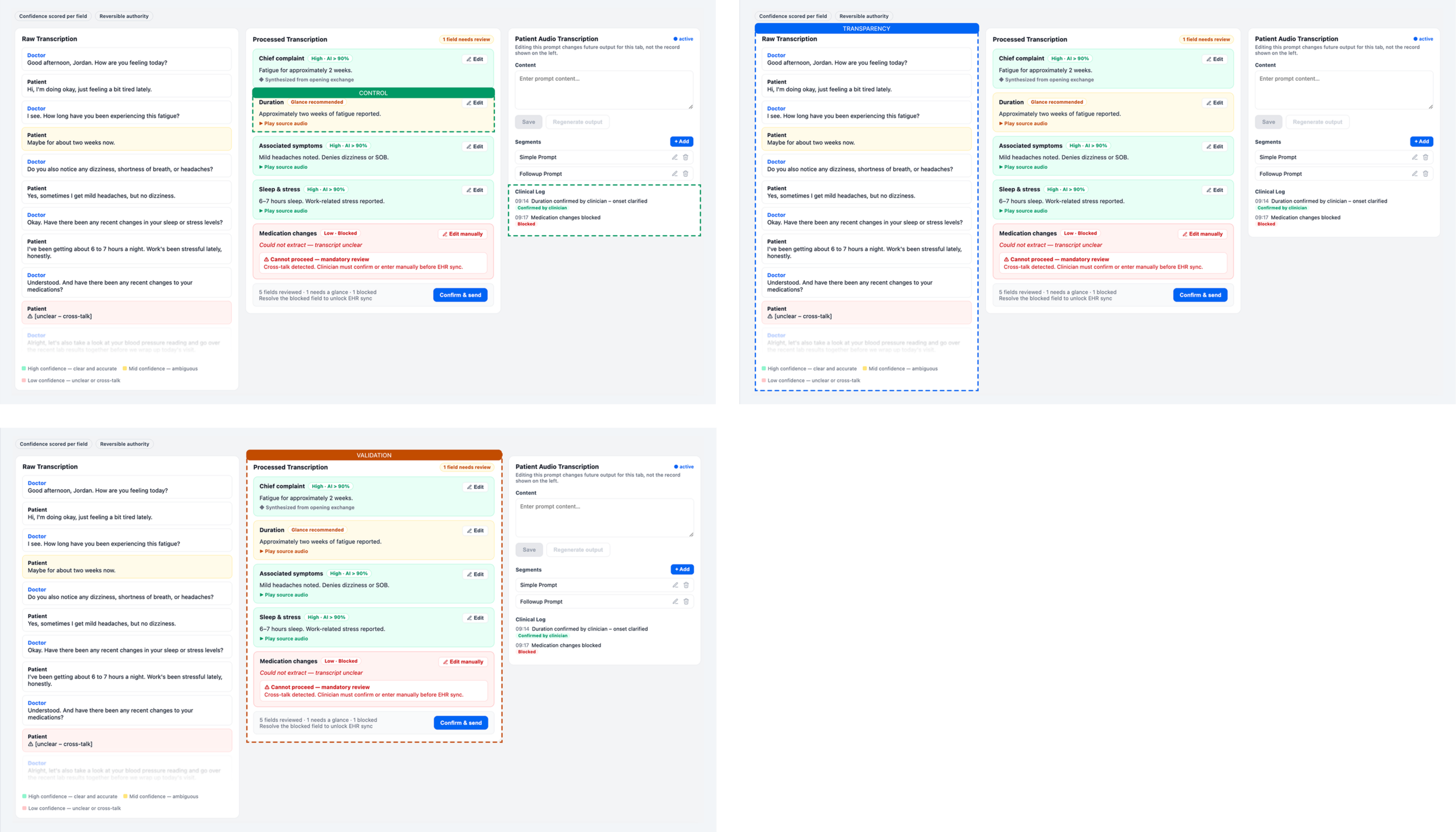
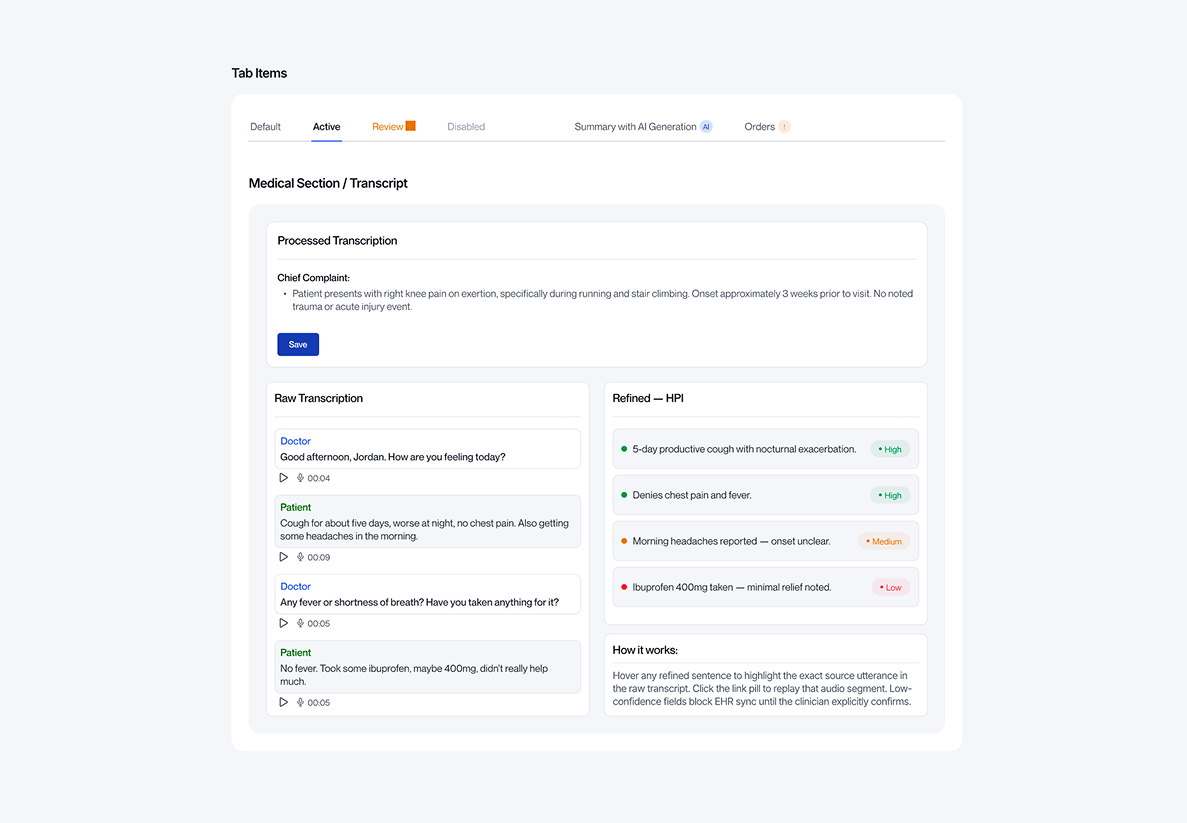
Embedded transparency and trust through dual-view interfaces showing raw and refined transcripts, with explicit confirmation checkpoints, while ensuring human-in-the-loop control by giving clinicians final approval before data syncs to Athena or CharmHealth.

Architecture Diagram

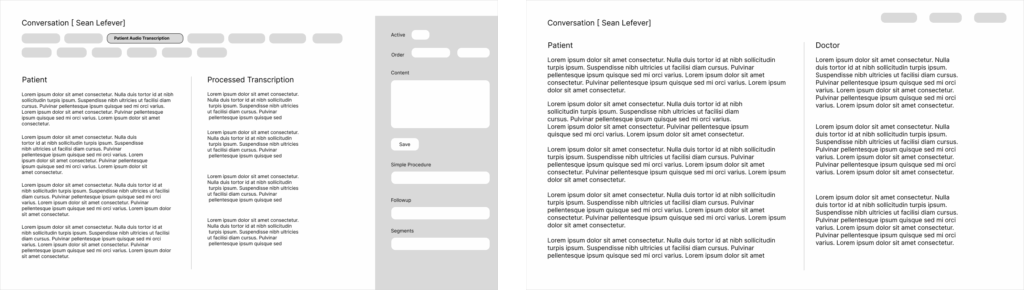
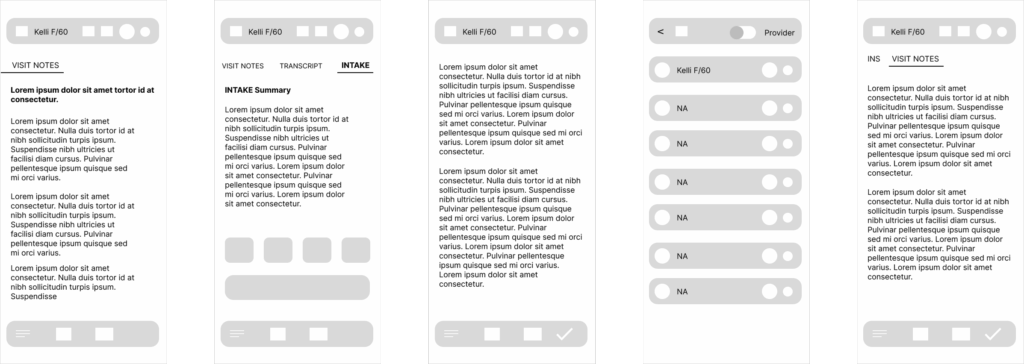
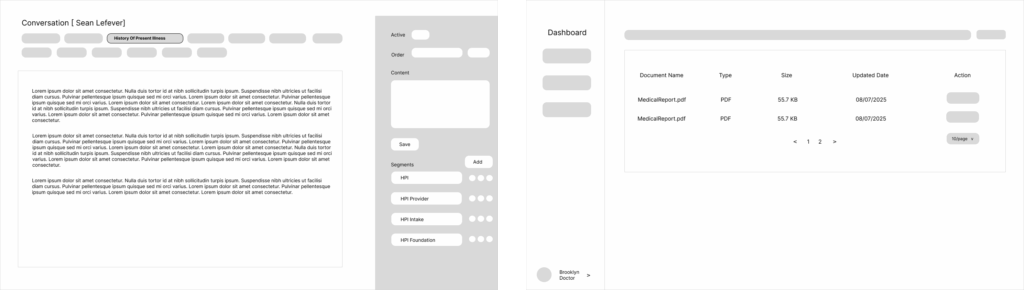
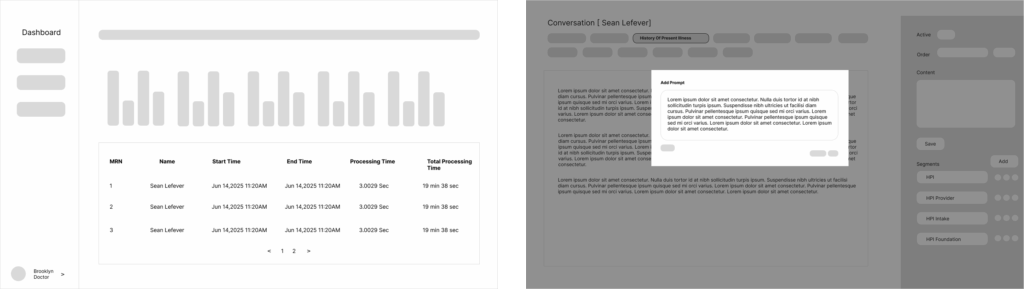
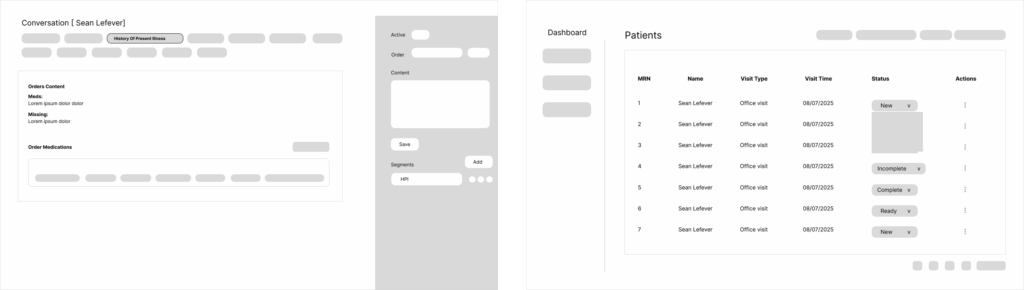
Low-Fidelity Design

High Fidelity Design

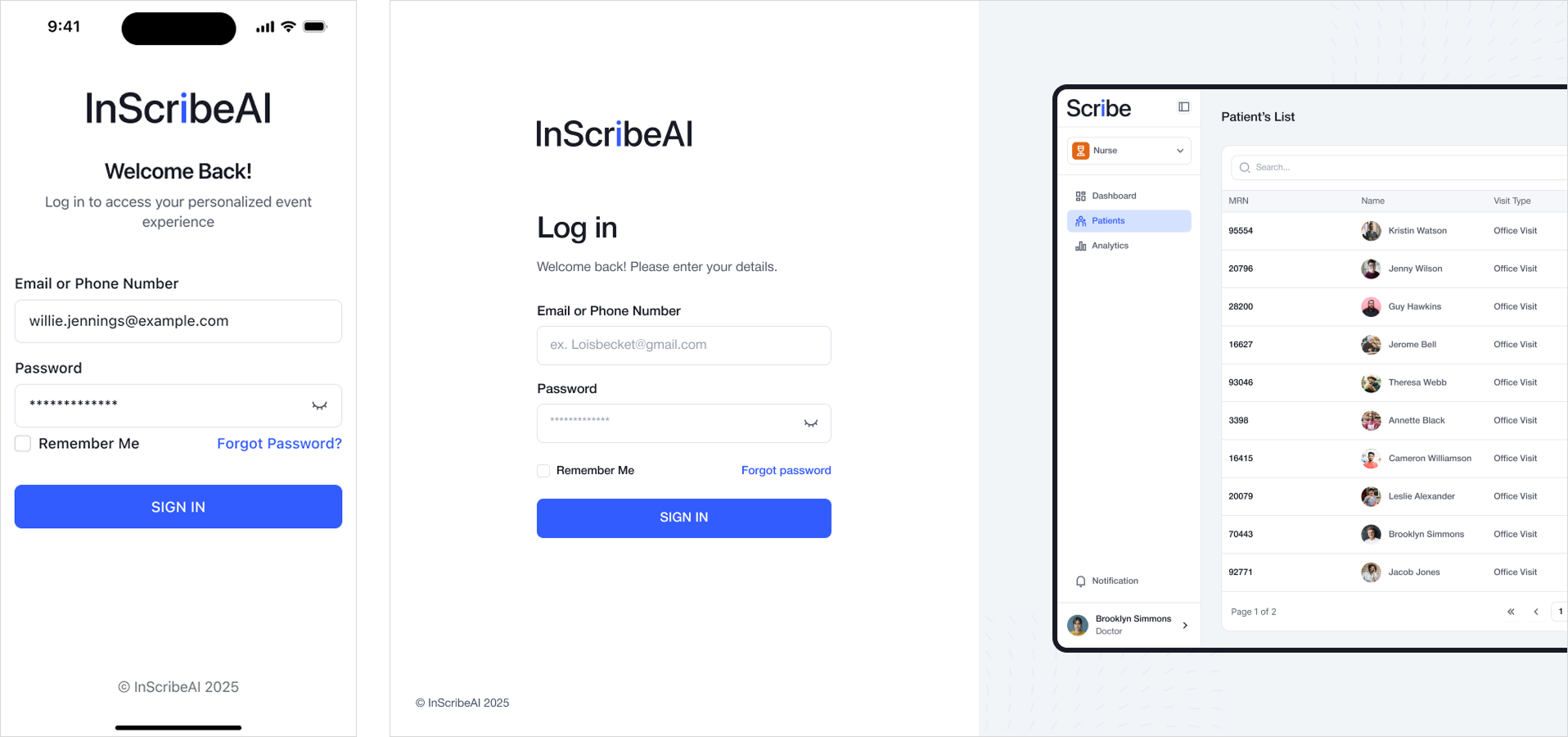
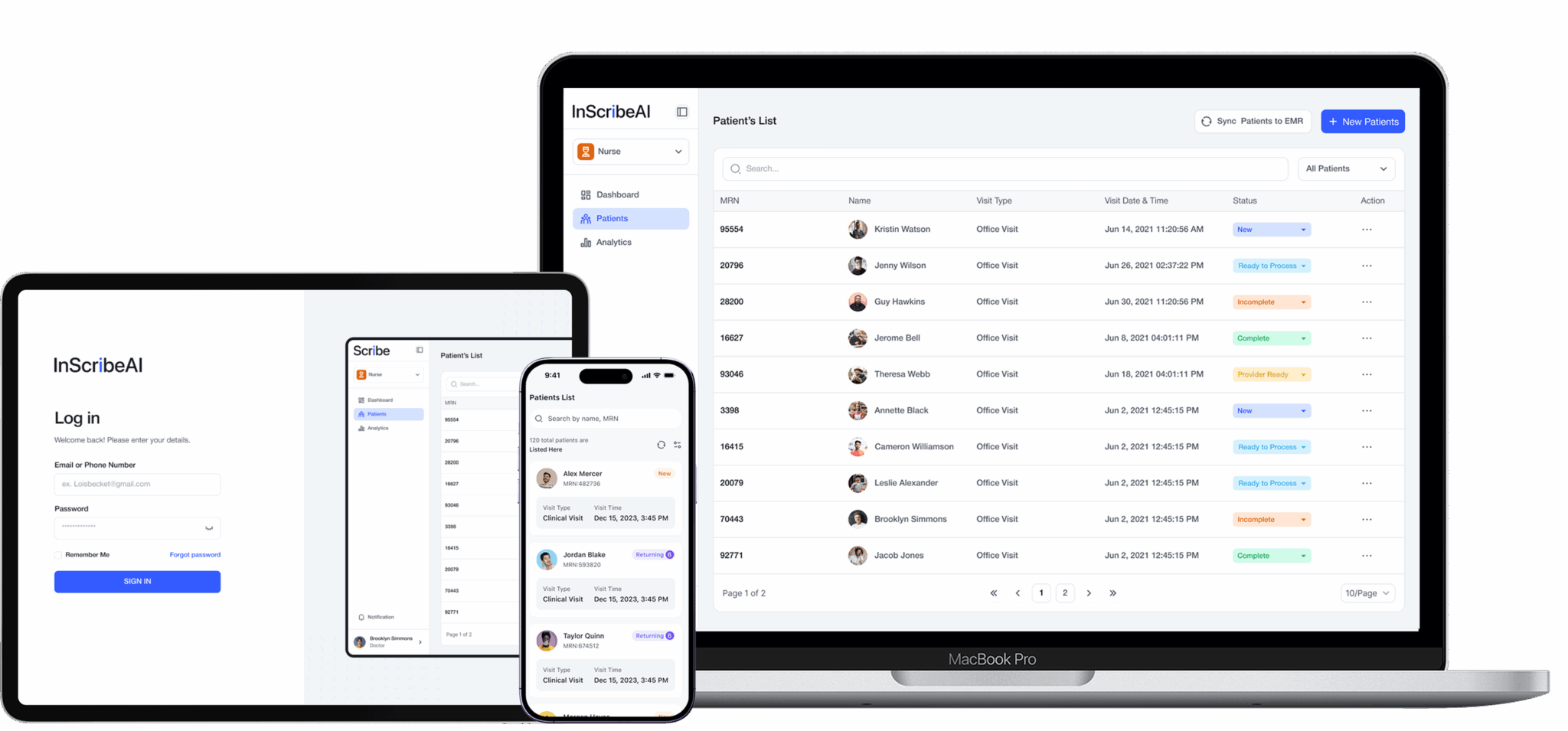
Role Based Login & Access Control

Secure authentication for nurses and GPs across the mobile app and SaaS portal, ensuring each user sees only the workflows and data relevant to their role..

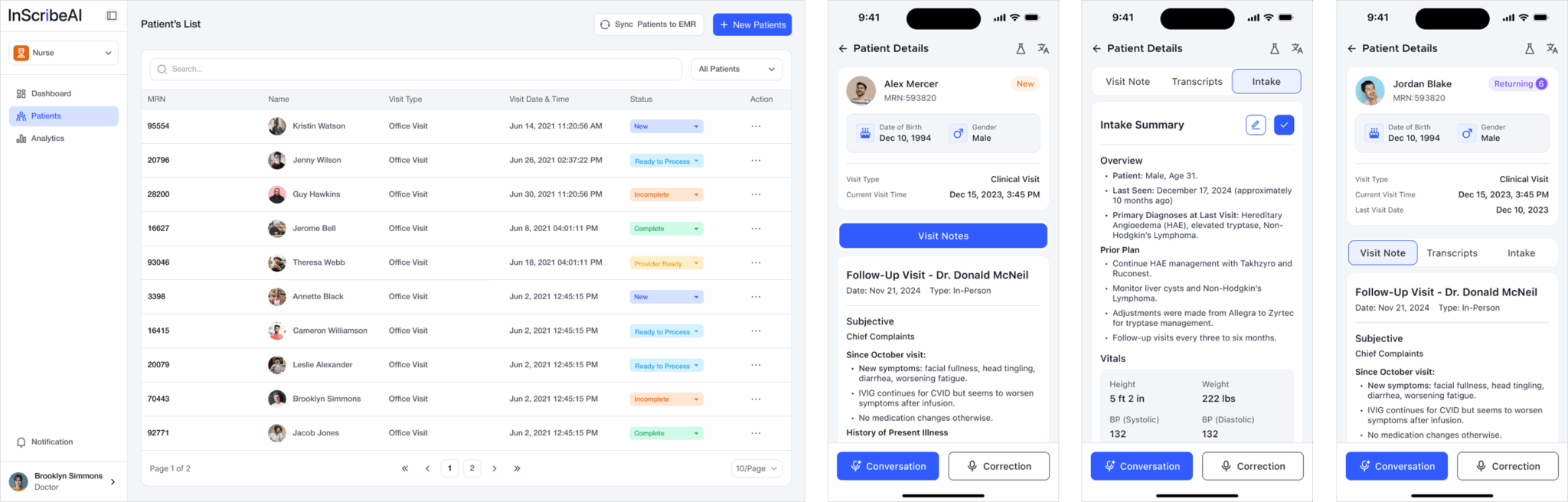
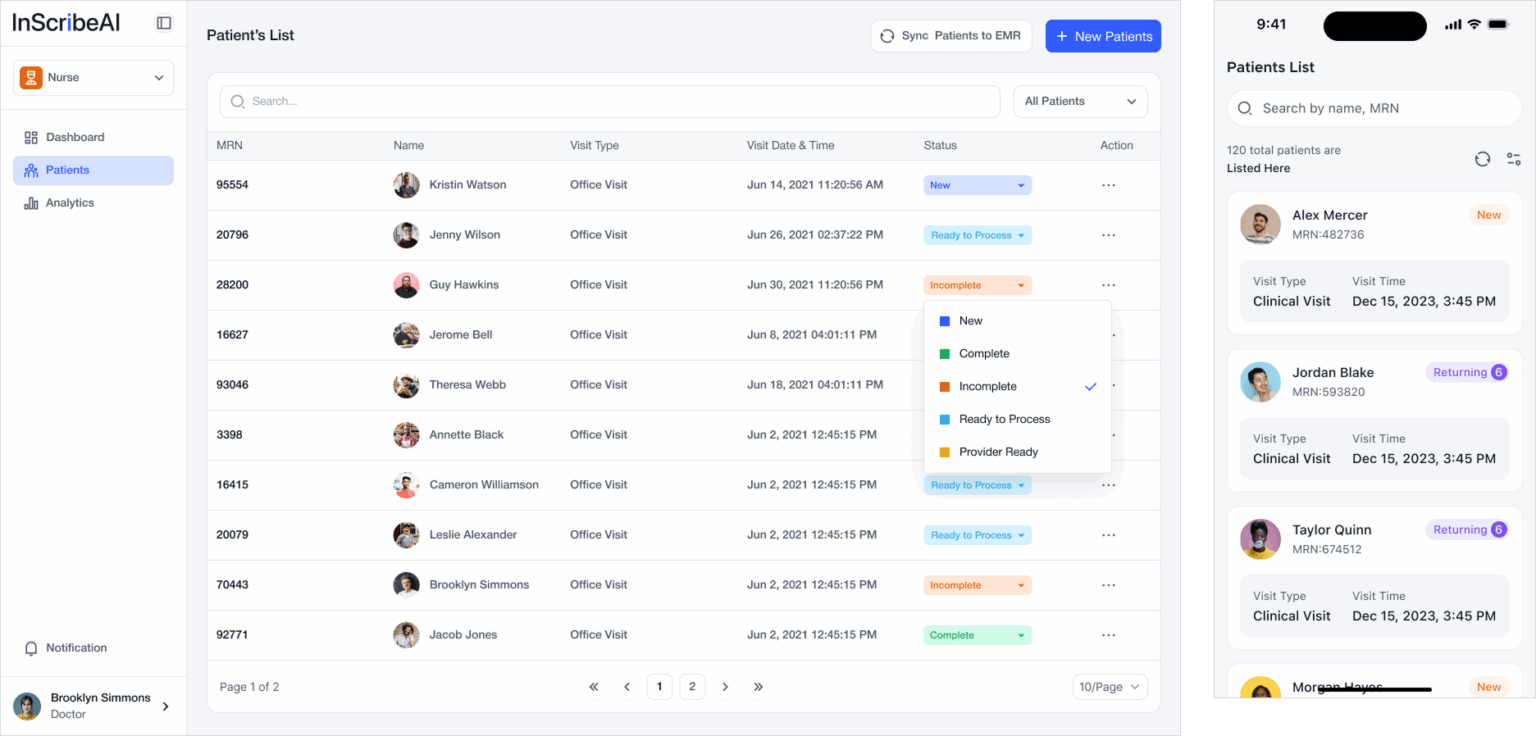
Nurse Intake Workflow

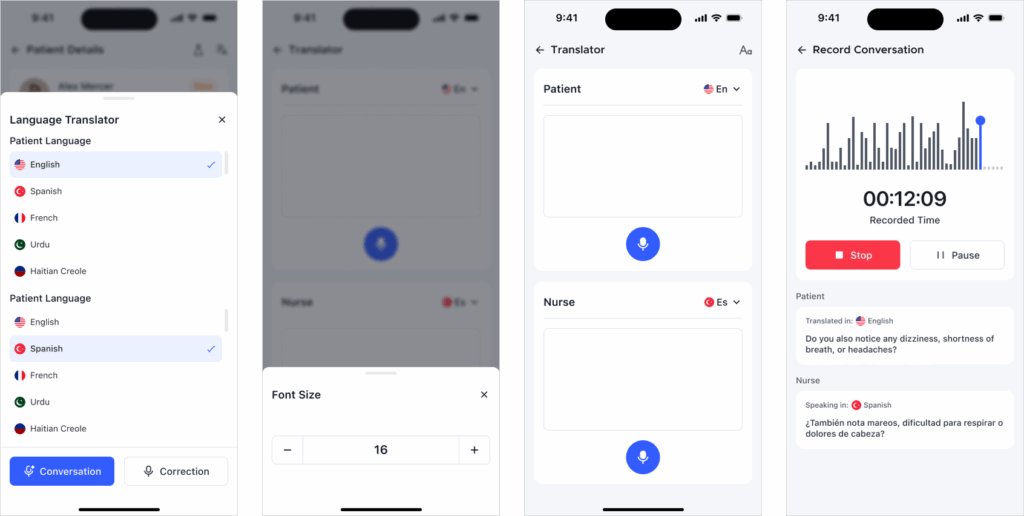
New patient registrations from Athena appear instantly in the app. Nurses record the visit, sending audio to AssemblyAI for transcription and then to ChatGPT, which generates an editable Intake Summary with structured fields.

Doctor Intake Workflow

After the nurse approves the intake summary, the data flows to the doctor’s app and Scribe Portal. The doctor records the patient visit, and the audio is transcribed by AssemblyAI, then refined by ChatGPT. 
Automated Tab Completion

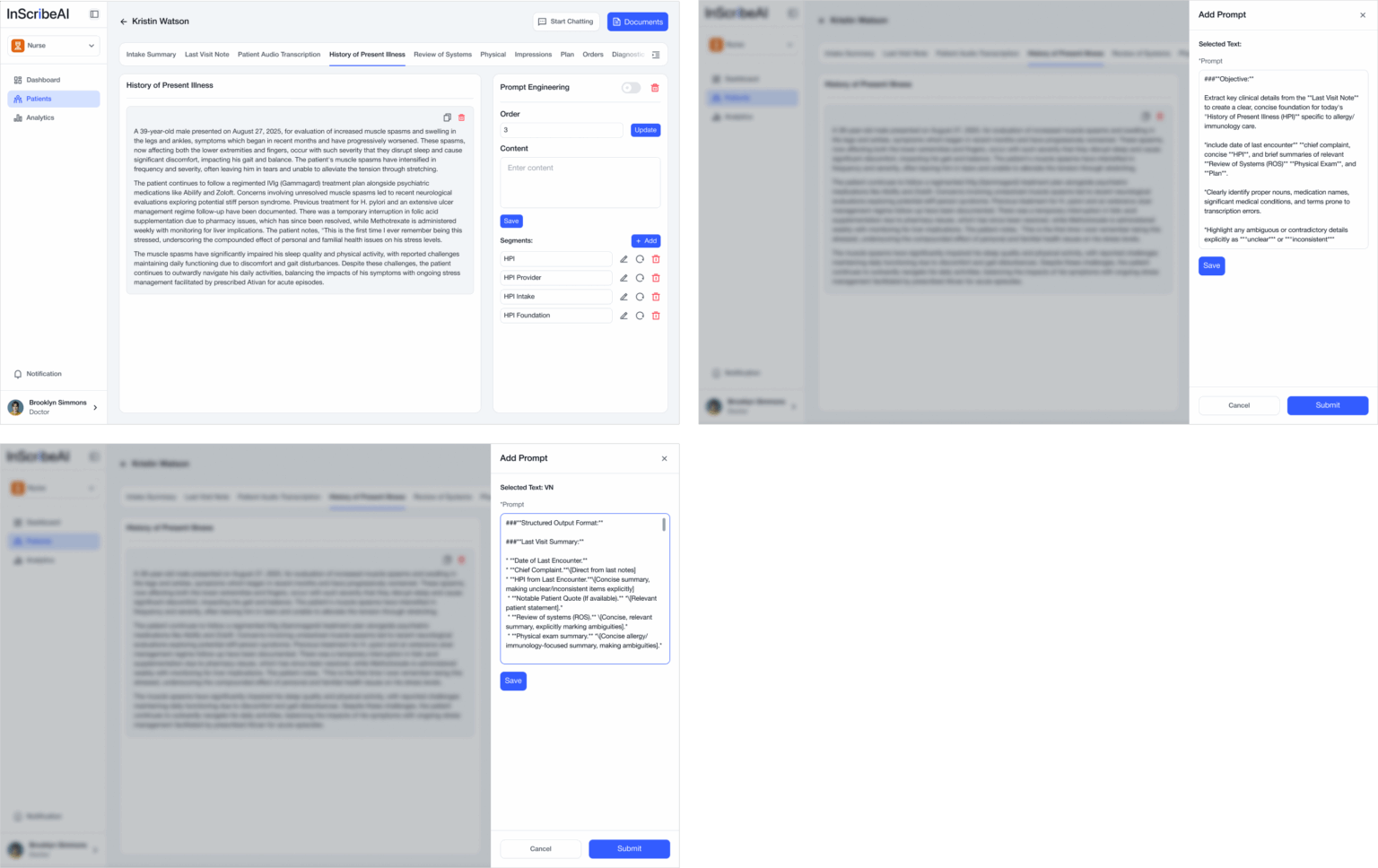
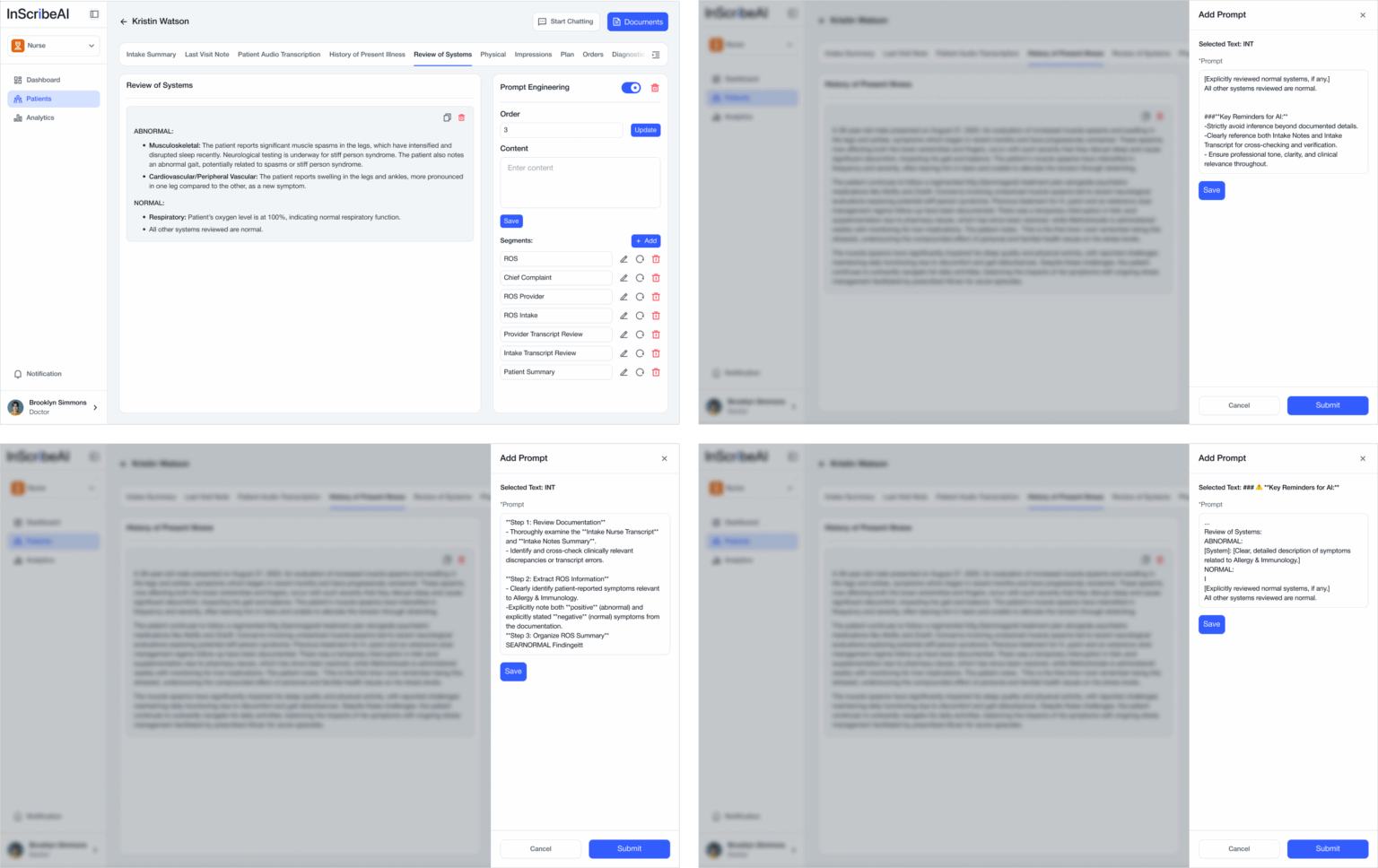
The doctor’s interface contains multiple structured tabs such as HPI, Orders, and more. Each tab is populated through dedicated prompt-engineering pipelines that send the AssemblyAI transcript with tab-specific prompts to ChatGPT, which returns refined text to fill each section automatically.

Tab-Specific Prompt Engineering

Each clinical tab was crafted with carefully tuned prompts, iterated and refined based on ChatGPT’s recommendations, to ensure the most accurate and context-aware output for every section.

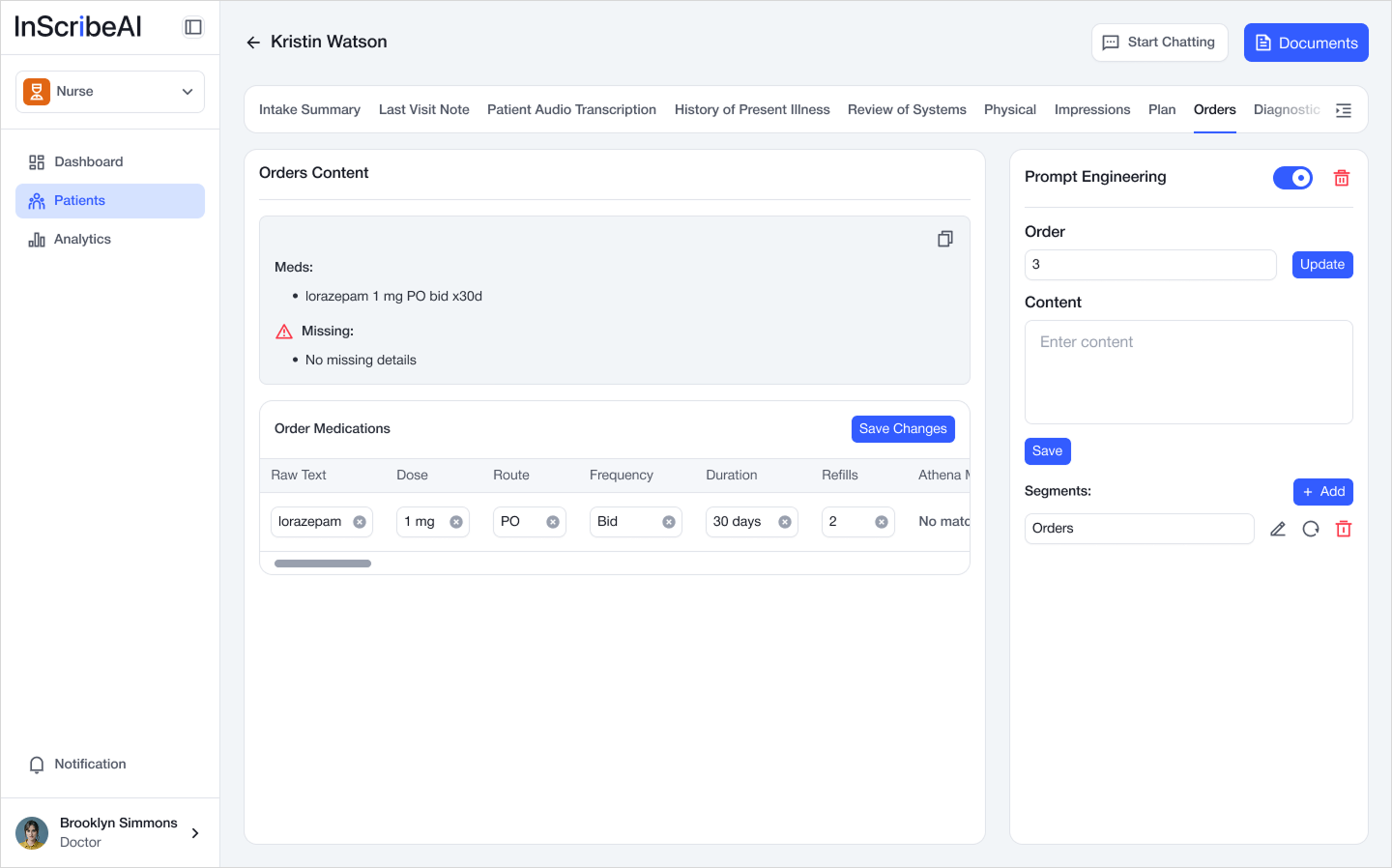
Orders Tab Automation

A dedicated prompt pipeline extracts medications, labs, and procedures from the AssemblyAI transcript. ChatGPT then returns a clinician-ready Orders list, displayed alongside the raw-to-refined prompt stages in the UI.

Lab Reports & Documents Access

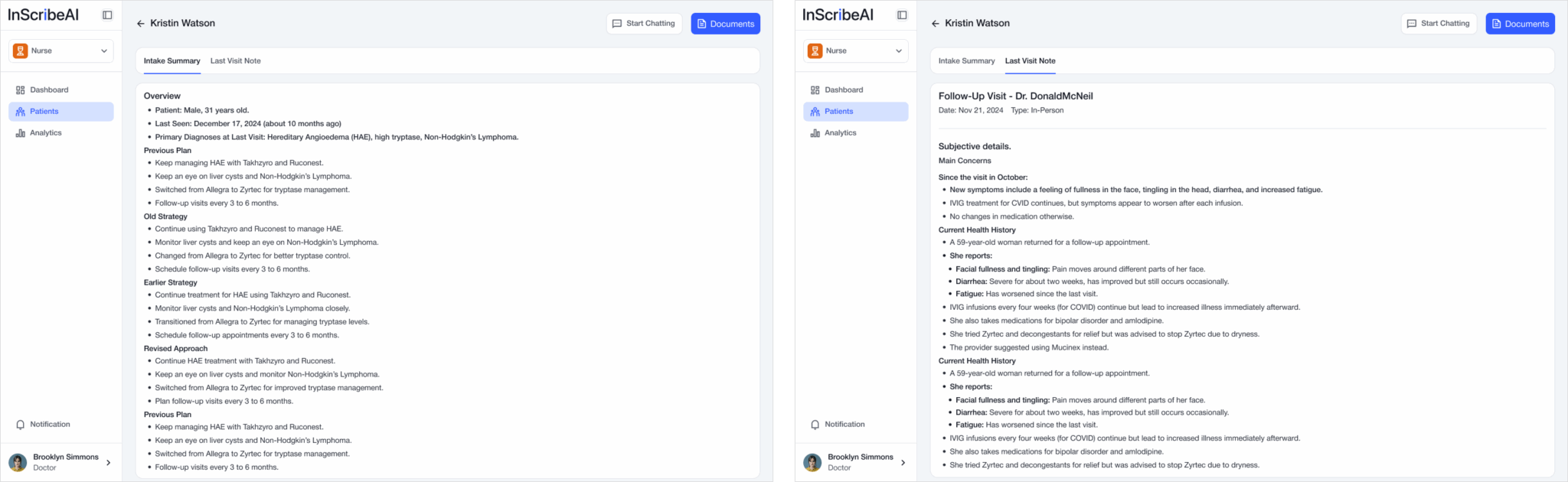
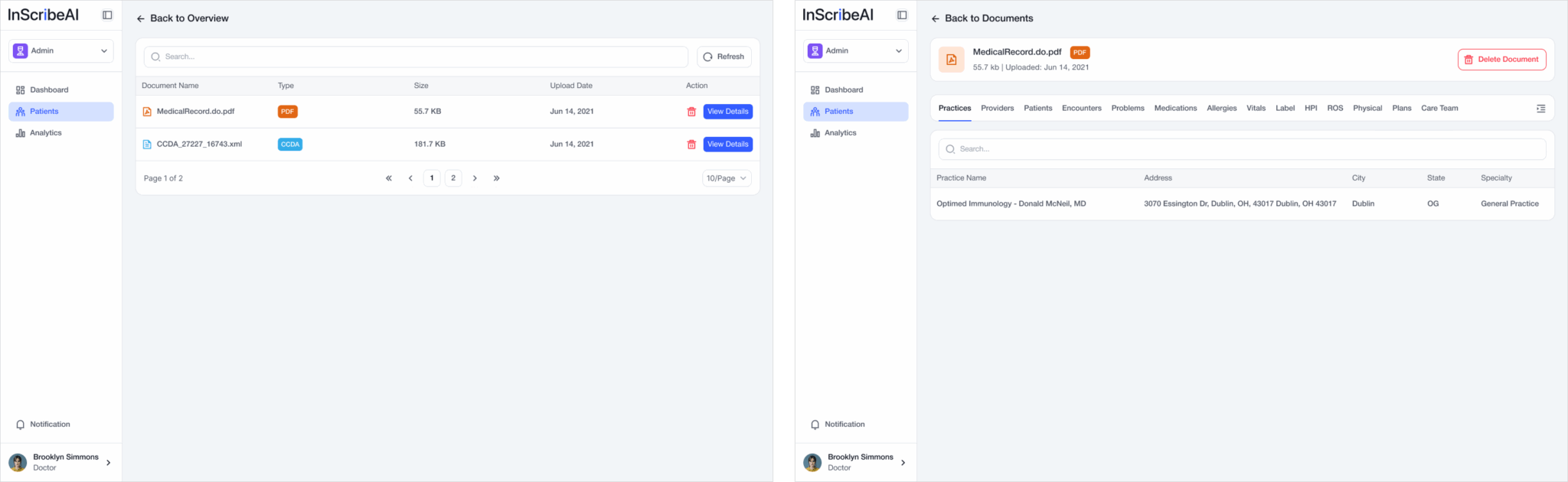
The app and SaaS portal fetch medical reports and lab results directly from the EHR. A lab icon in the mobile app and a dedicated Documents tab in the portal let clinicians quickly view all patient reports.

Final Approval & EHR Sync

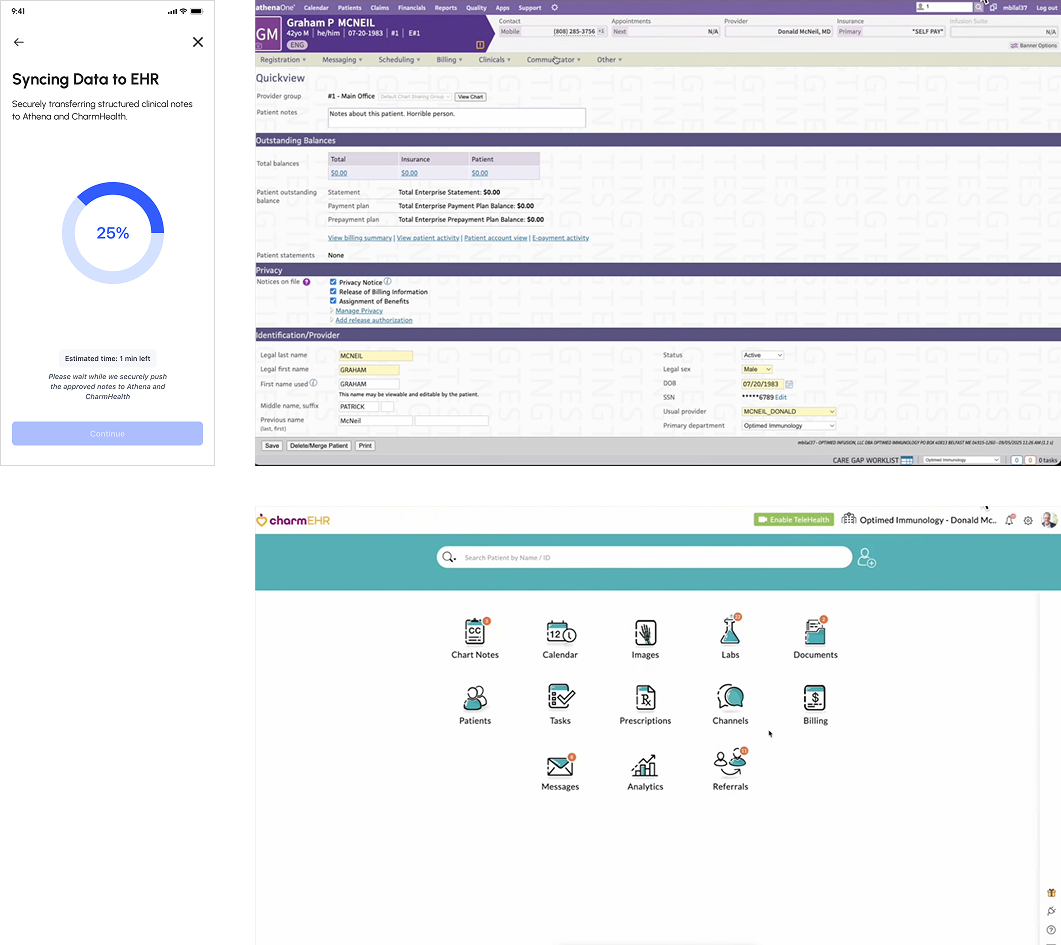
After the refined data is populated in both the SaaS dashboard and the mobile app, the doctor reviews and confirms it. Once confirmed, all structured and AI-refined information is automatically pushed to Athena and CharmHealth, ensuring the entire consultation is securely stored in the patient’s official EHR.

Chat with Patient Records

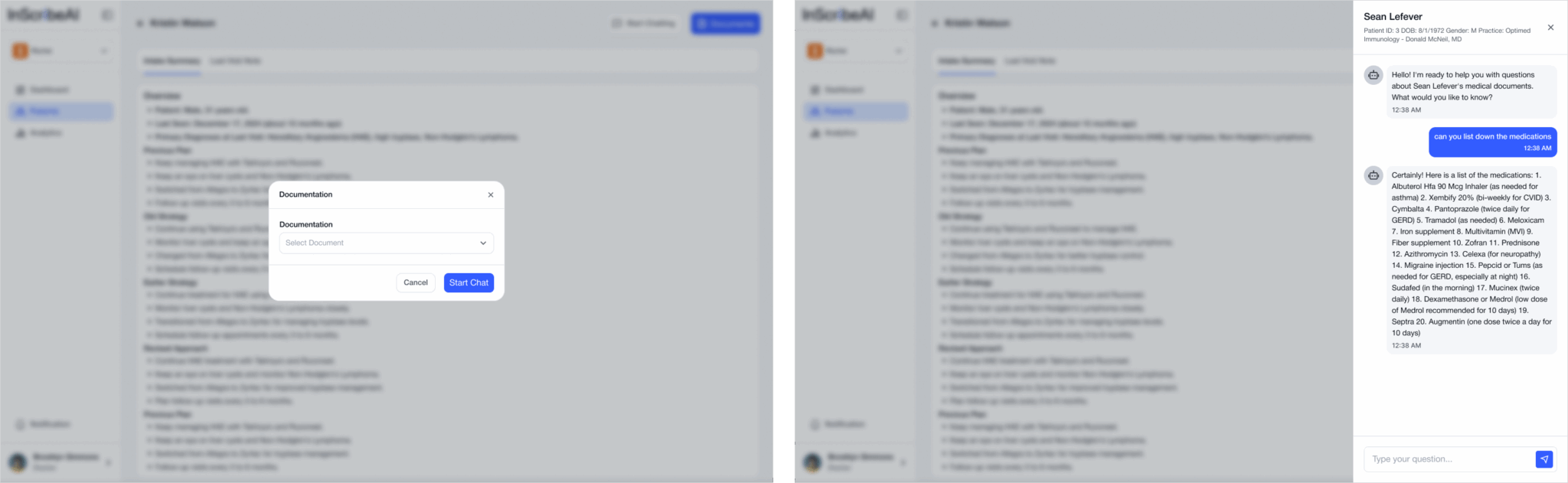
Within the Scribe Portal, clinicians can open a patient’s medical report, select a document, and start an AI-powered chat. Using Retrieval-Augmented Generation (RAG), ChatGPT searches the chosen report to answer natural-language questions instantly surfacing medications, lab results, or other key details and saving valuable review time.

Chat with Patient Records

Within the Scribe Portal, clinicians can open a patient’s medical report, select a document, and start an AI-powered chat. Using Retrieval-Augmented Generation (RAG), ChatGPT searches the chosen report to answer natural-language questions instantly surfacing medications, lab results, or other key details and saving valuable review time.

Time Efficiency Gains

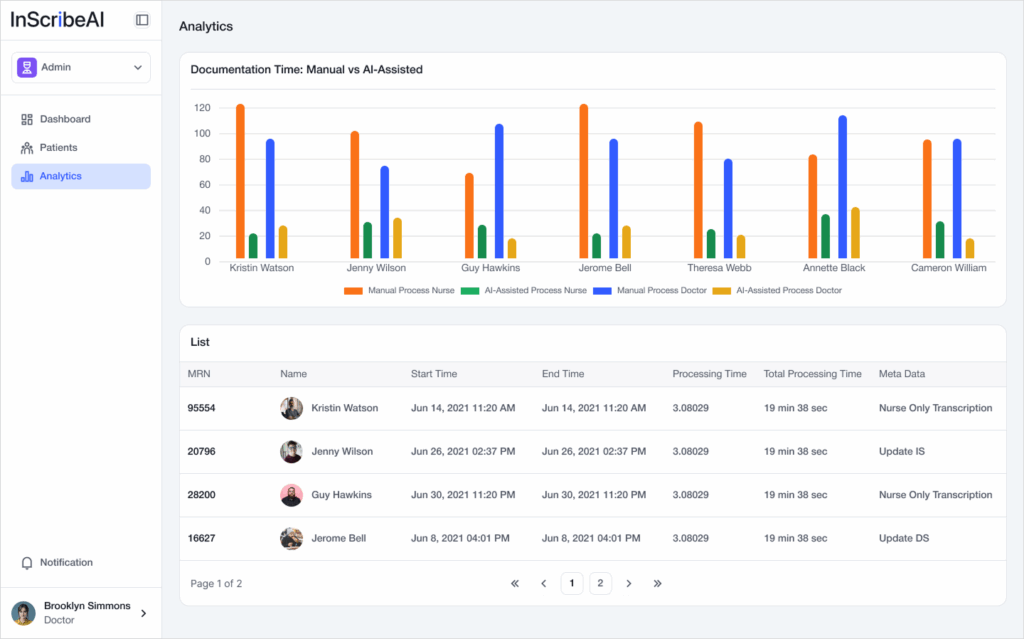
AI automation cuts clinical documentation from hours to about 20 minutes per patient. Nurse and doctor conversations are transcribed by AssemblyAI, refined by ChatGPT, and stored in the app/portal—reducing errors, ensuring consistency, and freeing clinicians to focus on care.

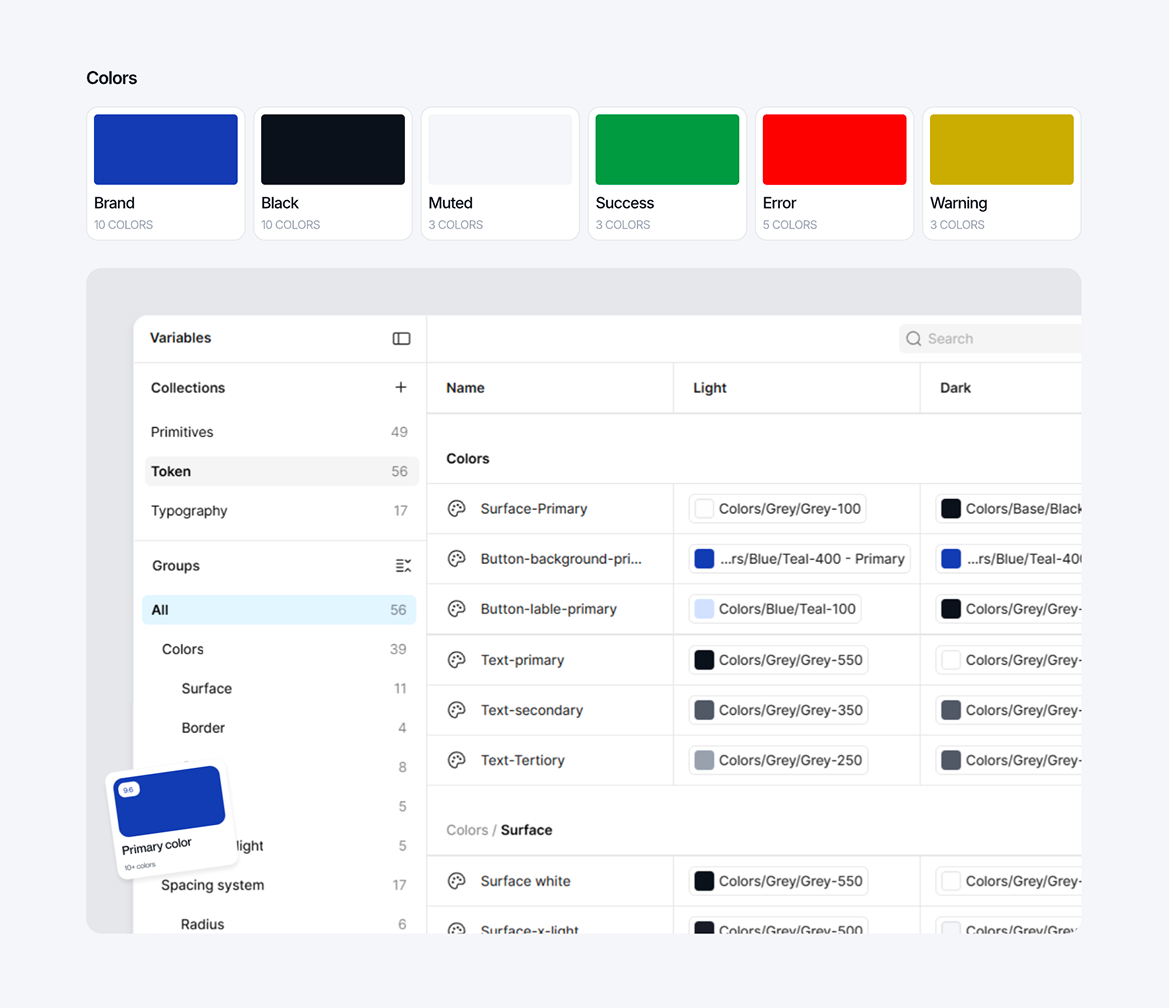
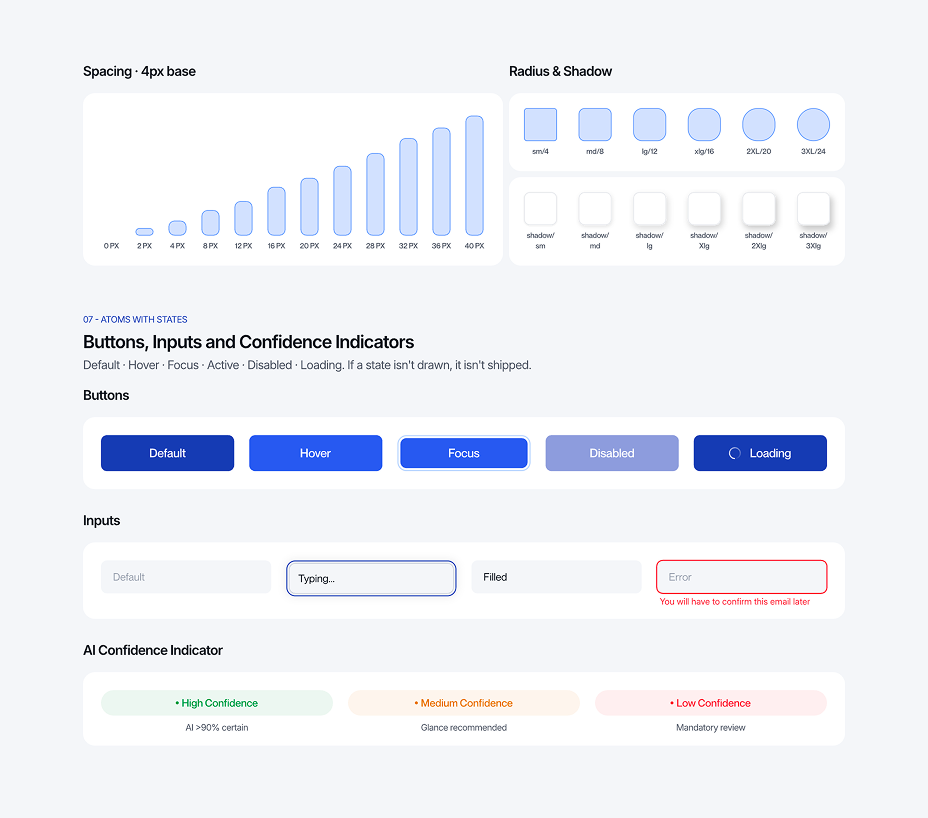
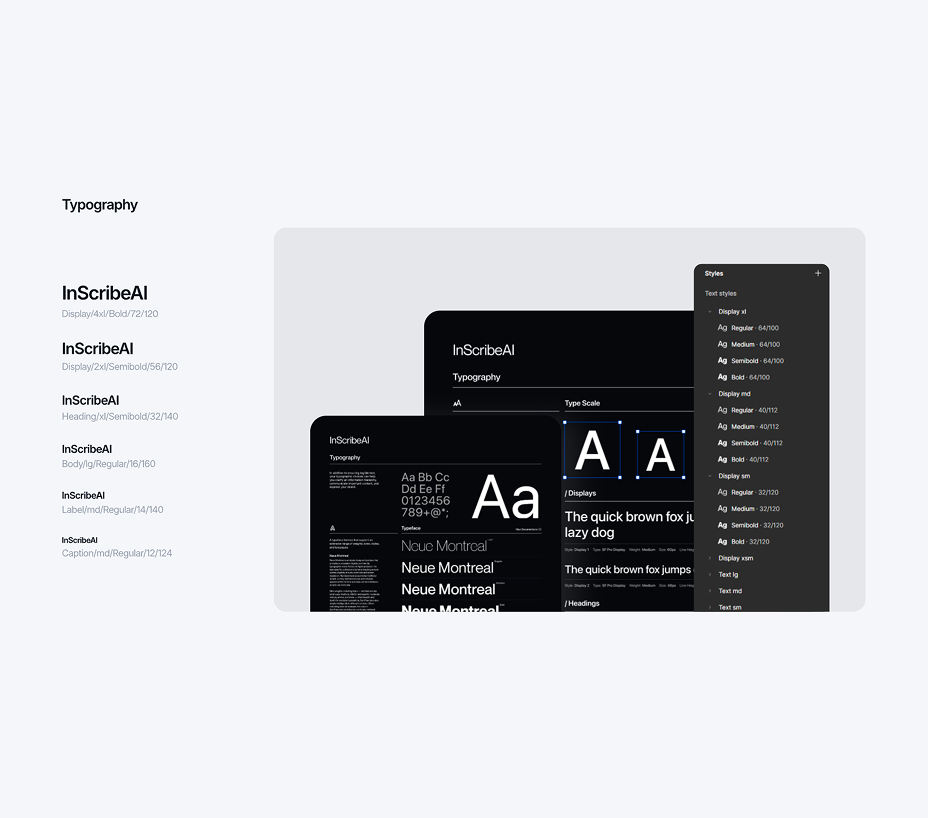
Design System

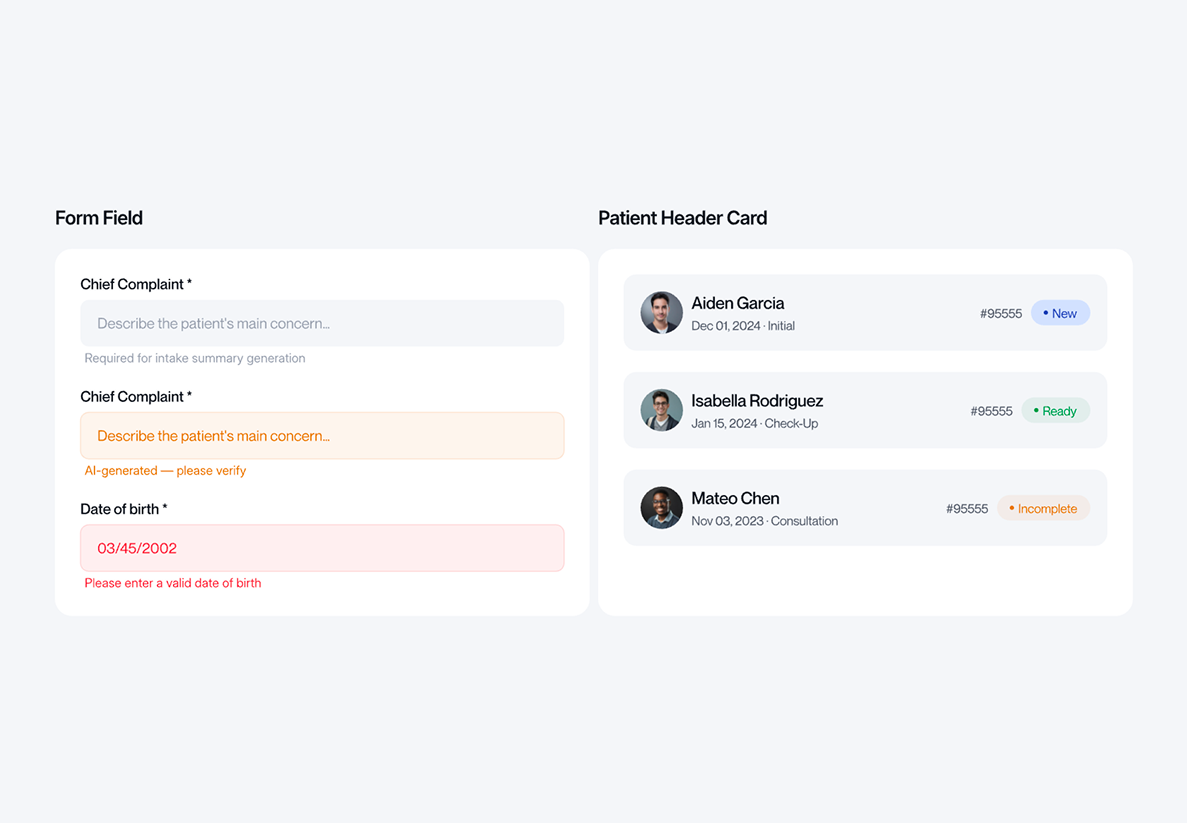
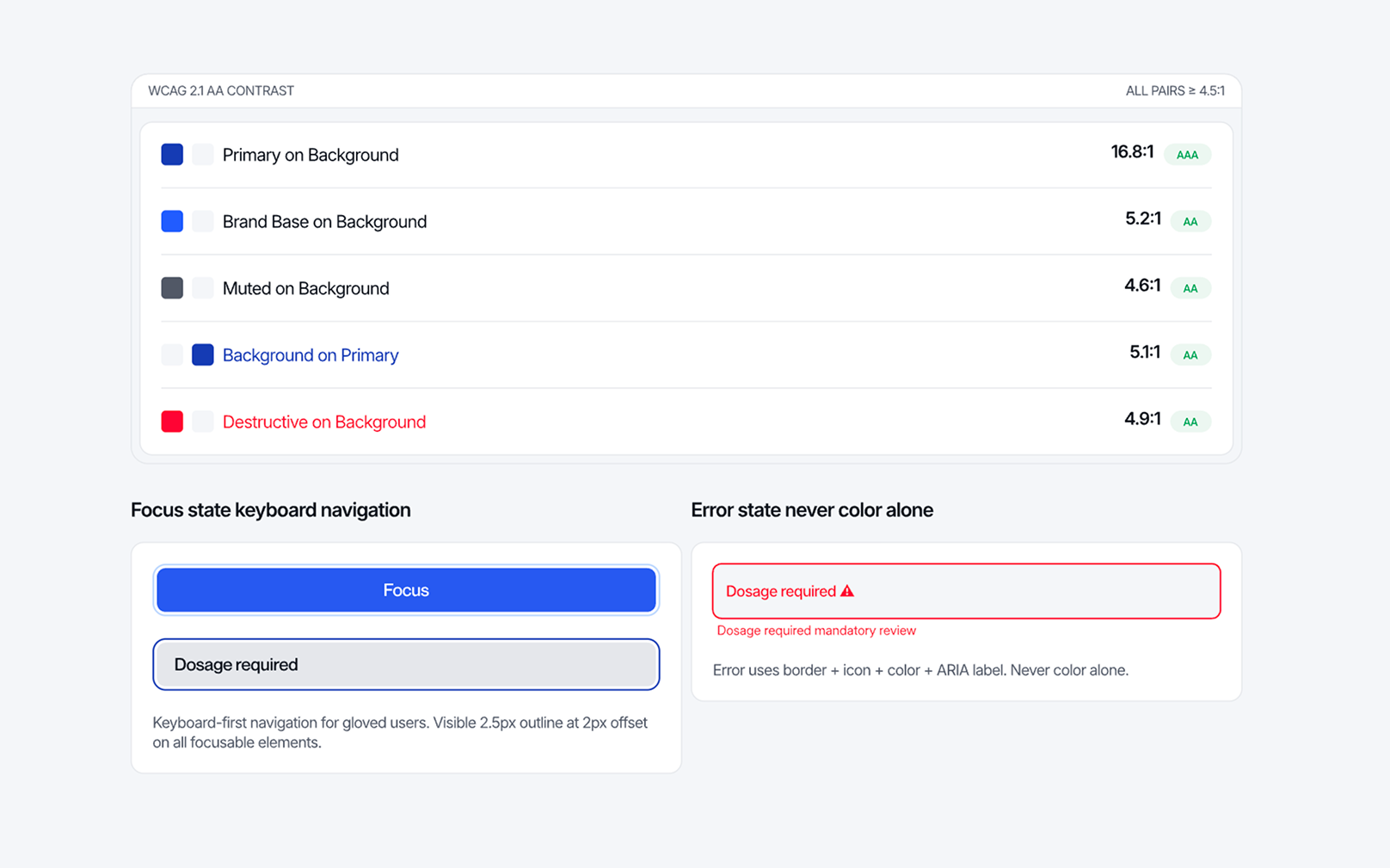
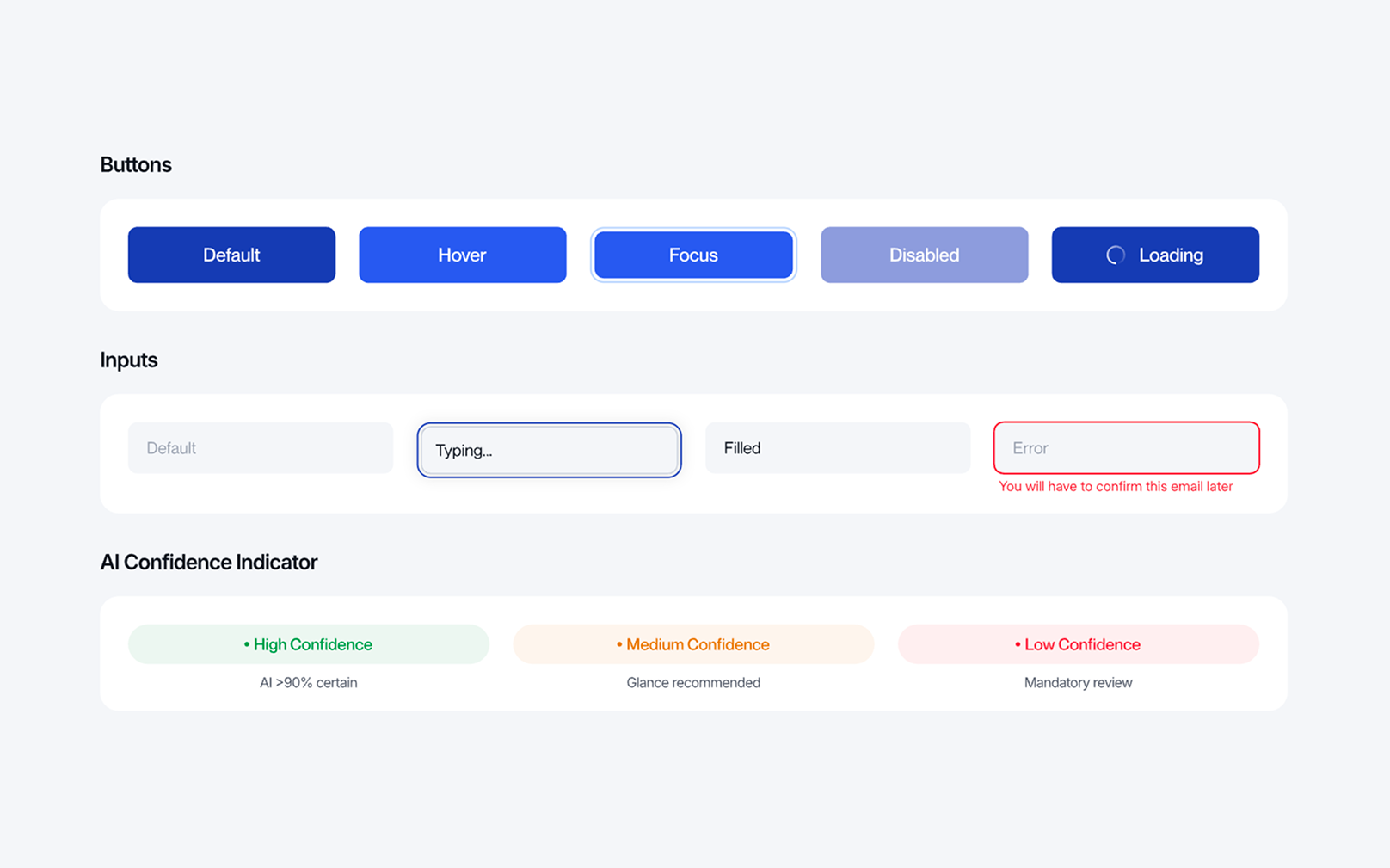
The design system was refined from existing guidelines and shaped by doctor feedback, favoring a clean white-and-blue interface that ensures clarity and ease of use in clinical settings.

Future & Ongoing Work
Technical / AI Enhancements
  • Agentic AI Automation: Transitioning the system from guided prompts to fully agentic workflows that proactively manage clinical documentation and follow-up tasks.
  • Advanced Context Awareness: Training the model to handle multi-visit patient history and cross-patient context for richer, longitudinal insights.
  • Predictive Suggestions: Real-time AI recommendations for diagnoses, orders, or follow-up tests based on conversation cues and historical data.
  • Multilingual Support: Expanding speech recognition and clinical terminology coverage for non-English consultations.
  • Edge Processing & Offline Mode: Local processing options for clinics with limited connectivity while maintaining HIPAA compliance.
UI/UX & Interaction
  • AI Micro-Interactions: Adding subtle animations, real-time confidence indicators, and smart status cues to build user trust.
  • Adaptive UI: Interfaces that adjust based on clinician role or workflow stage, reducing cognitive load.
  • Voice-First Shortcuts: Hands-free commands for navigation, data review, and approvals.
  • Personalized Dashboards: Contextual insights and quick actions tailored to each user’s specialty or past activity.